1. The Sanders Portrait of Shakespeare: A Summary of the Genealogical Evidence and Provenance
IMPORTANT NOTE: As of November 2012 crucial new information has been discovered about the early genealogy that precisely links Lloyd Sullivan, the owner of the Sanders Portrait of Shakespeare, to the painter. New charts and specific details will be released soon. The new evidence is wholly consistent with the Sanders family lore about the painter of the portrait, with the social and cultural affiliations of the Sanders family with the Midlands and with the Shakespeare family, and with the transmission of the portrait through 13 generations of owners to its current owner. One tantalizing detail is that two of the people in the earliest part of the genealogy were members of the Painter-Stainers Company, the guild officially charged with visual work for everything from coats of arms, to theatre sets, to funerary displays.
“The revelation of Sullivan’s familial relation to the Bard (and, it turns out, to some of the playwright’s friends and intimates) can only heighten interest in––and possibly reinforce––Sullivan’s claims about the so-called Sanders portrait.” James Adams, “Ottawa portrait owner is the Bard’s kin,” Globe and Mail, Friday, Apr. 10, 2009
William Shakespeare shook the dust of the old world of literature from his feet and boldly created a “brave new” one. It is interesting, and perhaps symbolic, that the Sanders portrait was “discovered” in the so-called “new world.” It seems as if the image in the Sanders portrait represents the youthful vigour and vitality of the Americas, while the Martin Droeshout engraving and the Memorial Bust, literally and allegorically, denote a certain faded imperial glory.
Coincidentally, the age of the Sanders portrait roughly matches that of Canada. In 1603, when it was painted, the great explorer Samuel de Champlain had just set his first tentative steps in New France.
According to Sanders family tradition, the portrait was painted by an ancestor, John or William Sanders, a friend of Shakespeare who was a bit player in his company of actors. The current owner of the portrait, Lloyd Sullivan, a direct descendant of the Sanders family that was deeply connected with Shakespeare and his social and cultural milieu, states:
“As I was growing up in the 1940s living in NDG in Montreal, my grandmother who was living with us at the time, mentioned on several occasions that the story that came down through the family was that an ancestor of ours, a Sanders definitely painted the Sanders portrait back in the early 1600s. She said that the family believed that the first name was John or William. Both names are prevalent throughout the Genealogy Charts [published here for the first time] mapping my direct line of ancestry back to Shakespeare’s moment. So, the painter could have been John Sanders (senior) as he probably was the right age in 1603, or, it could have been his brother William, again depending on his age around the early 1600s.
Based on a combination of the research so far and on family lore it could have been John Sanders or a William Sanders. But we will need further information that we’re in the process of acquiring. I lean towards William because of the following:
1. In the Lord Chamberlain’s Accounts of 15 March 1604, Part 6 there is a list of the Lord Chamberlain’s Men‘s messengers and William Sanders is mentioned as one of the messengers on page 34 of 40. Then on page 36 William Shakespeare is mentioned in the list of the Lord Chamberlain’s Men players. There is little doubt, given the social and cultural proximity of the court and its players, that William Sanders, being a messenger for Lord Chamberlain, would have had contact with Shakespeare for such things as giving him his pay or passing on instructions or notes from the Lord Chamberlain or others associated with the company of actors.
2. Another reference I received is scholar Gerald Eades Bentley’s The Jacobean and Caroline Stage: Dramatic Companies and Players (2 Vols., Oxford, 1941). In this reference a William Sanders is listed as an actor in the King’s Men on pages 72 and 74 and then again on page 559 (under “Players”). The Dramatic Records of Sir Henry Herbert Master of the Revels, 1623-1673 (New York: Benjamin Blom, 1964: 74) names William Sanders, along with numerous others including Edward Knight, William Pattrick, and William Gascoyne, as “imployed by the Kinges Maiesties servantes in theire quallity of Playinge as Musitions and other necessary attendantes” (click on the image below to see the full entry in Herbert’s records):
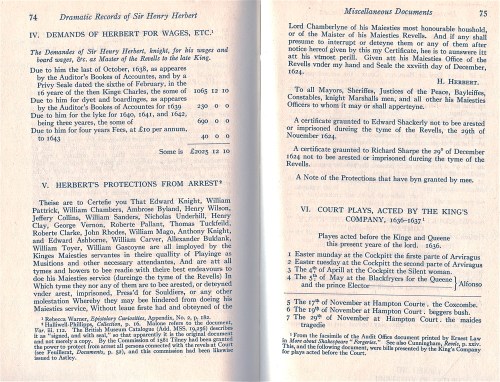
So, it seems like it is either John Sanders (senior) or his brother William Sanders that painted the Sanders portrait but we will need more information [which we’re currently gathering] … to verify this.” (personal correspondence between Lloyd Sullivan and Daniel Fischlin, 4 March 2011; )
Further research has indicated that at least two other versions of people with the surname Sanders (sometimes spelled with variants that include Saunder, Saunders, and Sandes, among others) were in close proximity to Shakespeare. David Grote’s book, The Best Actors in the World: Shakespeare and His Acting Company, cites Saunder as an apprentice boy actor to Richard Burbage. This Saunder would have been approximately 24 in 1603, the date indicated on the Sanders Portrait of Shakespeare. Here’s some of what Grote’s book gives us in terms of his contributions to the company:
In The Seven Deadly Sins, a boy called Saunder played six of his seven scenes with Burbage. He played two significant roles, Gorboduc’s Queen and the beautiful Procne who is raped by Tereus. We do not know the actual size of the roles, so Saunder might have been as young as thirteen; the important point is that he was obviously Burbage’s boy. Assuming the plot was made in 1592, then this Saunder would have been around sixteen in 1595, the age at which we would expect to see him assigned his largest roles. Juliet is Shakespeare’s (and the Chamberlain’s Men’s) attempt to take full advantage of what must have been his considerable talents. (As was seen earlier, this was not Alexander Cooke, who was about the same age but apprenticed to Heminges. This was also not the “Sander” in the quarto of The Taming of A Shrew played by Pembroke’s Men before 1593, as is sometimes suggested, for the Sander in that script was obviously the company’s adult clown.) (38)
Did this boy actor, apprenticed to the great Burbage (himself recorded as a painter), perhaps realizing the greatness of Shakespeare, start to paint Shakespeare’s portrait in London (with Shakespeare’s permission) while he was close to him? But then not seeing a great future for himself as an actor (he had grown out of playing female roles), did he decide to move to the country to pursue his future and to finish his portrait of Shakespeare in a much safer and quieter environment (away fron the Black Plague and the Catholic persecutions)? This may answer the question of how and why did the Sanders/Saunders family ended up with William Shakespeare’s portrait.
Another possibility of a Sandes/Saunders/Sanders who had connections with Shakespeare is James Sandes (Saunders), who was brother-in-law to Robert Browne, William Robbins, and Christopher Beeston and Uncle to Robert Browne junior. James was known for his acting between 1605 and 1617 and was with the Kingsmen from 1605 to 1608, not coming back to Warwickshire/ Worcestershire prior to 1617. Frederick Gard Fleay’s A Chronicle History of the London Stage, 1559-1662 lists James Sandes as Augustine Phillips’ apprentice in 1605 (375), the same year Phillips died (in May). Sandes was linked in multiple ways to the London theatre scene. His sister Cecily married Robert Browne (not William Sly) and when William died in 1680 he left his share of the Globe to Robert Browne who did not keep it very long. Browne died in 1622, and Cecily re-married actor William Robbins. When William Sly, a colleague of Shakespeare’s and Burbage’s in the Lord Chamberlain’s Men and the King’s Men, died in 1608 his Will made mention of James Sanndes (or Sannder) and left James £40 (click on the .pdf below to see evidence of this).
If anything, these facts point to members of the Sanders family who were in close proximity to Shakespeare and his closest associates in various ways connected to the theatre scene in London and at exactly the time when the Sanders Portrait of Shakespeare was painted.
The portrait, the family, and their stories are intertwined and have survived fire, floods, and a transatlantic voyage. The Sanders always kept the portrait close to them––sometimes proudly displayed in their homes, at other times tucked away in a cupboard or under a bed for safe-keeping.
Quietly, the Sanders portrait passed from generation to generation to the present owner, Lloyd Sullivan, who acquired it from his mother, Kathleen Hales Sanders. The portrait’s unique provenance, having been passed through the centuries within one family, is an extraordinary story––one that few portrait histories can duplicate.
The Canadian Adaptations of Shakespeare Project (CASP) is pleased to make available, for the first time, an abbreviated family tree of the main trunk of the Sanders family associated with the Sanders Portrait, beginning with John Sanders in the sixteenth century and culminating in Lloyd Sullivan, the current owner of the Sanders Portrait of Shakespeare.
It is important to understand that this genealogy is really Mr. Sullivan’s genealogy (it originates with him) and explains, in part, why and how the Sanders Portrait ultimately came into his possession as a function of an intergenerational family legacy.
James Adams’s above-cited 2009 article in the Globe and Mail outlines how “Thanks to a still-growing body of genealogical evidence accumulated in the last six years, it’s now clear that Sullivan is indeed kin to the world’s greatest playwright. True, it’s a “relative of relatives / the thigh bone is connected to the backbone via the hip bone” phenomenon, but real nevertheless: a link by what genealogists call “affinity”––in this case, a string of marriages stretching back centuries among families with such sturdy English surnames as Sanders, Throckmorton, Catesby and Arden. Before, during and after Shakespeare’s time, these families lived in closely connected communities in the English Midlands, in such towns as Coughton, Huddington, Droitwich, Temple Grafton, Worcester and Stratford-upon-Avon, Shakespeare’s birth (and death) place.”
Genealogist Pamela J. Hinks’s work shows that “in 1594 Dorothy Saunders, a relative of Sullivan’s, married one John Throckmorton––one instance of a number of marriages involving these families over the decades. Throckmortons also married Ardens, and it was one of those aristocratic Ardens, Mary, who in 1557 became the wife of a John Shakespeare, and seven years later gave birth to a boy christened William. In 1592 another Sullivan relative, Phillipi Sanders, married one Anna Heminges. She was the cousin of none other than John Heminges, born just two years after Shakespeare in Droitwich, near Stratford-upon-Avon. John Heminges later became an actor in Shakespeare’s company, and in 1623 co-edited and published the famous First Folio of the Bard’s plays. Hinks has limned many other linkages. One of the most intriguing concerns another Sullivan relative, Mathew Sanders, the fifth child of a Stephen Saunders––back then, spelling was anything but standardized––born in Coughton in 1677. (Note that the original Globe & Mail article mistakenly cites Mathew’s birthdate as 1624 and incorrectly references Mathew Sanders as the fifth child of Stephen Sanders––this has been corrected in italics in the current citation). At his death, in 1745 at age 68, Mathew Sanders was found to have a will in which he deeded “eight pictures” to his son William Sanders” (note that the original Globe & Mail article mistakenly says that Mathew deeded the 8 images to John Sanders. The CASP editorial team has corrected this error in what we cite above in italics).
This genealogy is based on historical research that begins with Mr. Sullivan, traces its way back through his known relatives, and ends in the late sixteenth century in the very specific geographic area and community (in and around Coughton) where the Shakespeares, Ardens, Catesbys, Throckmortons, Heminges, and others associated with the Shakespeare legacy are to be found.
No other portrait associated with Shakespeare can make as direct a genealogical claim or argument.
No other portrait or portrait owner has this sort of direct and intimate link into Shakespeare’s own historical moment, cultural milieu, and family. It is important to remember that the only possible reason to account for the portrait ending up in Mr. Sullivan’s possession (and this is based on intergenerational familial provenance) is that the Sanders family kept the portrait as part of its legacy through multiple generations of transmission of the object within the family.
The genealogy clearly shows the branch of the Sanders family to which Mr. Sullivan belongs as being affiliated in multiple ways with Shakespeare’s family and with key historical figures in Shakespeare’s immediate cultural circle. The genealogy also addresses the benchmark set by Sir Roy Strong, former Director of the National Portrait Gallery in England, who stated that the Sanders portrait “‘looks perfectly authentic for 1603, and the costume addressed is absolutely correct,’ but unless the picture’s provenance could be documented to early in the 1600s, its claim was tentative at best” (cited in Stephanie Nolen, Shakespeare’s Face). This comment was made well before the results of the genealogical work done by Pam Hinks had yielded such a clear and direct link between Mr. Sullivan’s family (the matrilineal trunk via the Sanders) and the exact geographic area that is at the core of Shakespeare’s cultural and social milieu in the Midlands.
The conclusions to be drawn from these genealogical findings are evident.
The remarkable research represented here is the result of British genealogist and antiquarian Pamela J. Hinks multi-year efforts to uncover the trail leading from Mr. Sullivan back to the sixteenth century. Her work has provided the basis for Mr. Sullivan’s own analysis of the data in consultation with a number of Shakespearean experts, including Dr. Daniel Fischlin, Director of the CASP site.
The Canadian Adaptations of Shakespeare Project (CASP) is making this genealogical information public for the first time. Due to the ongoing nature of the research, as well as issues around intellectual property, we are only making a portion of the full research available with more to follow shortly.
CASP remains deeply indebted to the work of Pamela J. Hinks and to Lloyd Sullivan and his family for permission to publish this remarkable genealogical trajectory.
2. The Partial Genealogy: The Sanders Portrait of Shakespeare Passed DownThrough Successive Generations of the Sanders Family
Below is the main family trunk of the Sanders family beginning with the person thought to be the painter (or the son of the painter) of the image, John Sanders, and ending with the current owner of the portrait, Lloyd Sullivan. The genealogy below is partial and represents the highlights of the line from Mr. Sullivan back to his ancestor John Sanders as uncovered by multiple years of extraordinary research accomplished by British genealogist Pamela J. Hinks.
It is important to understand that the relations between the Sanders and Shakespeare families were not glancing but existed over several centuries of contact in various ways.
Watch this space as we publish further photos, documentation, and a more complete family tree associated with the Sanders Portrait of Shakespeare. Over the next few weeks we will also be releasing a more complete description (with evidence) of the extended family relations that existed between the Sanders and Shakespeares.
Earliest information in the genealogy associated with Lloyd Sullivan’s direct line of relatives suggests that the portrait originated with and/or was passed down through one of the following people:
William Sanders (Senior): Great Coughton Inventory dated 1638 (no will)
The three boys born at Coughton––John, William and Stephen––seem to be the sons of William Sanders Senior following on an old Inventory associated with the death of William in 1638 (died at Coughton). The list reads: Richard Hill, who it seems was dealing with the estate, in attendance with John Sanders, Stephen Sanders, Edmond Bromley, and Frances Palmer. Also a Mary Sanders, widow of William Jones is mentioned. No mention of any pictures is made but the Inventory names main household items (i.e. Coffers etc.) and lists other items in each Chamber without actually naming them. Click on the image below to see the family tree associated with William Sanders:
John Sanders: date of birth between 1585-1600at Coughton; will dated 1st September 1660; died 1661
John was son of William Senior above and brother to William and Stephen. His will was written at the request of John by his dear friend Thomas Sheldon and witnessed by Stephen Sanders Junior who made his mark. John left the following when he died in 1661:
To each of his brothers children at the time of his decease 5/-
Servant Maids Frances and Joane (no surname mentioned) 5/- each
Two Servant men Richard and his sonne 5/- each
To my kinswomen Anne Carne? 10/-
The reminder of my estate to my dear wife Katherine and my son Mathew.
No value of the estate. No specific items listed.
William Sanders Junior (Yeoman): date of birth about 1595-1600:Inventory Dated: 1674
William Sanders of Coughton (junior) son of William above, married Anne (unknown surname) who was alive at the time of William’s death. First child born Stephen. 1674 Estate value was: £39 -05s 2d. Died at Coughton. Inventory shows main household items (i.e. Coffers etc.) but refers to other items in each Chamber as “listed as other things.” Note that this William was John’s Grandfather’s brother. Click on the image below to view the burial record for William Sanders, buried 19 January 1673, Coughton.
John Sanders (Senior) (Attorney to Sir John Talbot)
Born: Upton-Warren (small hamlet near Droitwich), Worcestershire, England (date of birth about 1559––no records survive for John Sanders’ date of birth and our date is based on the age as Elizabeth Caldwell who died in 1589). Note that no parish records exist for Upton Warren prior to 1604.
Married: Elizabeth Caldwell (Caldwall) of Burton-on-Trent, daughter of William Caldwell (Caldwall) of Burton-on-Trent.
Died (John senior): 1609 Upton-Warren, Worcestershire, England
NOTE: John Sanders’ (senior) and Elizabeth Caldwell’s son, John (junior), was born at Upton-Warren in 1594. Richard Sanders (date of birth about 1535, date of death 1595) of Upton-Warren was his grandfather. Pam Hinks notes that “Upton Warren was a small hamlet of some 2600 acres mainly at the time belonging to the Earl of Shrewsbury (George Talbot) since 1485 (Shrewsbury owned about four-fifths of the property). We know that the Sanders are a fairly wealthy family at the time of them being in Upton-Warren” (email correspondence with Daniel Fischlin 8 May 2011).
Research has found the following 1594 legal document designating John Sanders as one of Sir John Talbot’s lawyers:
John Talbott of Grafton in the County of Worcester Esquire to all Christ’s faithful people to whom this present writing shall come. Greetings in our Lord Eternal. You are to know that I, the aforesaid John Talbott, have ordained, placed and constituted, and by these presents do ordain, place and constitute for me in my place and in my name my beloved in Christ, John Saunders and John Chellingworth of Upton Warren in the aforesaid County of Worcester Yeomen to be my true and lawful attorneys jointly and severally and by theses presents I give to my same attorneys and to each of them jointly and severally full and entire authority and power for me in my place and in my name to take and receive by the delivery of Humfrey Parrott of Forfeeld in the aforesaid County of Worcester gentlemen or of his certain attorneys in this behalf, full and peaceful possession and seisin of and in all those three closes copses or parcels of Woodland called or known by the names of the Hill Lane Coppice, the great Coppice and the little Coppice lying and being in the Parish of Belbraughton in the aforesaid Humfrey Parrott. And after taking the aforesaid possession and seisin to retain and keep the same to the use of me, the aforesaid John Talbott, my heirs and assigns according to the force, form and effect of a certain charter made and completed to me in that behalf by the aforesaid Humfrey, the date of which is the same as the day of the date of these presents; and that I shall ratify and confirm whatsoever my said attorneys or either of them shall do in the premises in such manner and form as if it had been done by me personally.
IN WITNESS WHEREOF, I have set my seal to this, my present writing. Given the 4th day of October in the 34th year of the Reign of our Lady Elizabeth by the grace of God, Queen of England, France and Ireland, defender of the faith etc.
Signed John Talbott.[Translation from Latin and Transcription by Pam Hinks; our emphasis]
John Sanders (junior), became an alderman of the City of London—as appears on a monument in the church at Upton-Warren (see gallery below)—and settled a charitable annuity of £10 to be forever paid by the Grocers’ Company, London, for placing out a boy of this parish as an apprentice in London, and for lack of such a boy, then a boy of Stoke Prior or Chaddesley. In 1910 a premium of £10 was paid, and there was a balance of £40 in hand. For full details regarding this charity click on the gallery below:
Genealogical work on this John Sanders continues in order to determine the exact nature of his relationship to the overall genealogy. John Sanders (Junior) of Upton Warren/London exemplifies the mobility between a smaller town like Upton-Warren and London (a mobility that perhaps parallels Shakespeare’s move fron Stratford to London). John Sanders’ (Junior) date of birth was 1 May 1594 Upton-Warren; date of death May 1669 London. He married Mary Langton in 1626 in London (the daughter of Thomas Langton and Barbara Allen;Mary Langton’s brother was Sir John Langton High Sheriff of Lincolnshire). The register copy information for the marriage of John Sanders to Mary Langton is as follows:
John Saunders of St Peters Cheapside London Grocer and Maria (Mary) Langton, daughter of Thomas Langton (Fishmonger) and Barbra Allen19 September 1626, St Mary Stratford Bow, Tower Hamlet, London. To access the registry copy of the marriage as well as a copy of John Sanders’ (junior) burial entry for 7 October 1669, St Peters Cheapside, London, click on the gallery below:
This slideshow requires JavaScript.
From the Heralds Visitation of London 1633/34 John is confirmed as an Armiger (an Armour Bearer or Esquire, attendant upon a Knight, but bearing his own unique armorial device). He was also a London Alderman from 1662-64 and died very rich (Descd. of
Simon Langton who was elected Archbishop of York in 1215.)
Click on the gallery below to access more information about John Sanders junior and to see an image of a statue of Stephen Langton (1150 -1228), who was Archbishop of Canterbury and brother to Simon Langton (both were born in Langton, Lincolnshire). The gallery also includes the 1669 burial record for John Sanders Junior of the Grocers Company, son of John Sanders Senior and Uncle to John Sanders, Painter and member of the Paint Stainers Company (see below).
This slideshow requires JavaScript.
NOTE: Two relatives of John Sanders (junior) have direct connections to painting:
1. Research has shown that Richard Sanders of Upton-Warren had in his Inventory, dated 1631, three painted cloths. This Richard Sanders is the Uncle to Alderman John Sanders born 1st May 1594. Click on the gallery below to access the original documentation of this fact.
2. John Sanders (nephew of John Sanders [Junior––see above] and son of Robert Sanders, John Sanders’ brother, who was born in 1599) was born in 1628 and died in January 1701. This later John Sanders completed his apprenticeship 13 July 1647, where he was granted a license to trade as a professional painter (by this time he would have been in his 20s). In a record in London it is stated that he was also a member of the Paint Stainers Company, an organisation of stainers, or painters of metals and wood (our emphasis), that is known to have existed as early as 1268. John became a Warden in 1674 and Master thereafter in 1680. He died without issue. (Alderman Peyntors & Steynors).
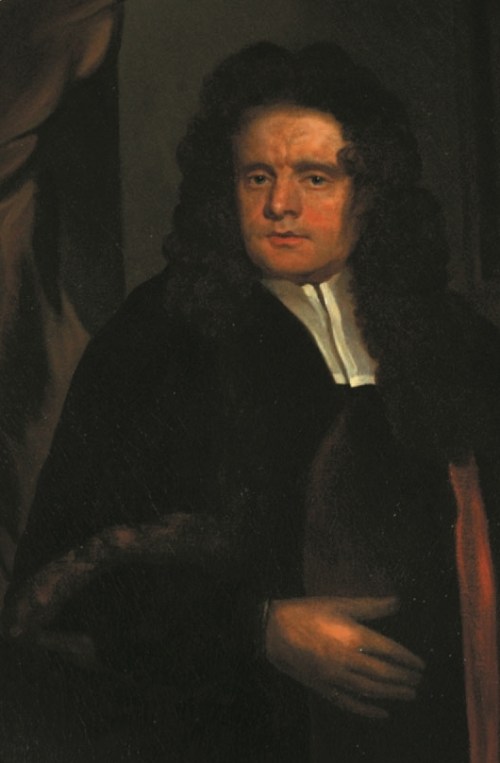
Stainers Art is an interest that John Sanders of Rowington (see below) also had in common since he was recorded (very unusually) as having 3 pictures hanging on his wall in his Inventory in 1617 following his death just 14 years after the Sanders Portrait of Shakespeare was painted in 1603. (One can only wonder what the subjects of John’s paintings were.)
It is clear, both in the early and later generations of the Sanders’ genealogy, that an obvious interest in art existed in the family that ran through multiple generations (including the evident talent of the Sanders portrait artist). Further on in this genealogy please note both Mathew Sanders whose will included 8 pictures and Thomas Hales Sanders, whose work as a painter was exhibited in London.
John Sanders of Rowington died without issue though he was married to Elizabeth Aston.
Stephen Sanders (Senior), grandfather to Mathew (see below)
Born: circa 1600, Coughton, Warwickshire
Died: 1681, Coughton, Warwickshire
Click on the gallery below to access burial records of Stephen (buried 4th Feb. (?) 1681, Coughton):
This slideshow requires JavaScript.
Stephen Sanders (Junior)
Christened: 28 December 1624, Coughton, Warwickshire,
First Marriage: Eleanor in 1659 at Coughton
Second Marriage: Susanna (Anna) Ruberie on 29 July 1671 at Coughton
Died: 31 August 1702, Coughton, Warwickshire
Inventory dated 1702 for Stephen Sanders (Junior); son of Stephen Sanders (Senior). The Inventory includes an Admon.
NOTE: Admons contain the name, residence, and occupation of the deceased and of the person or persons appointed to administer the estate.
Stephen left no Will, only an Inventory and Admon, which confirm that at the time of his death his wife Susanna was still alive since she is mentioned on the Inventory as Stephen’s widow. Value of the estate was £73 -12s -0d. Admon granted to Susanna Sanders of Coughton for which she made her mark in 1702. The Inventory shows normal household items with other items “listed as other items.”
Stephen was baptised 28 December 1624 at Coughton and was married twice: first to Eleanor in 1659 with their short-lived only child John Sanders (1660-1661); and second to Susanna (Anna) in 1671.
The children from Stephen Sanders’ second marriage to Susanna (Anna) are:
1) John Sanders baptised 10 May 1674 Coughton married 1704 to Sarah Edwards at Combrook, Warwickshire (recorded at Warwickshire). John was baptised 10 May 1674 in Coughton. See below for a digitial copy of the baptismal record.
2) Susanna baptised 20 April 1672 Rous Lench married Thomas Parkes
3) William Sanders baptised 10 Dec 1676 Coughton married Katherine Y? (William & Katherine had 6 children; their son Charles was baptised on 16 April 1699)
4) Mathew Sanders was baptised 30 March 1677 Coughton and married Susanna Shenstone
5) Thomas Sanders baptised 16 Jun 1680 married Mary Mills
NOTE: No record has been found for any marriage of Stephen to Anna so one must presume that Susanna was also known as Anna, especially given that the dating is perfectly in line. John (1674-1729 ) and Mathew (1677-1745 ) are sons of Stephen (dod: 1681) and nephews to the two others mentioned John (dod: 1661) and William (dod: 1674). Information in Wills has made this possible to conclude as being correct. Please note that this family line is still under research.
For an image of the burial record of Stephen Sanders (father of Mathew, 1677-1745 ) click on the gallery below:
NOTE: No records survive before 1616 at Coughton.
Pamela Hinks suggests that “Around circa 1624 we have three male lines of Sanders, John, William, and Stephen with no Baptismal records due to the lack of records prior to 1616 in Coughton. Following the common attitude of the day to family naming it is more than likely all three were brothers. From the early 1700s the Sanders started to move on from Coughton nearer to Worcester.
Stephen Sanders was Church Warden in Coughton in 1681 at St Peters Church. The village of Coughton is just 8 miles from Stratford upon Avon. Coughton Court, home of the Throckmortons since 1409, dominates the surrounding area. St Peters Church is located on the outer grounds of Coughton Court.The building is attributed to Sir Robert Throckmorton and dates from between 1486 and 1518. The church tower is thought to be older. Sir Robert Throckmorton died on a Pilgrimage to the Holy Land in 1518 for which prior to his journey in his Will he left money to the church for the depiction of “Doom” in stained glass in the East window, and the “Seven Sacraments” in the North Chapel, and finally the Seven Acts of Mercy in the South Chapel. Fragments of these appear to be scattered through the aisle windows. (NOTE: Doom is a painting of the Last Judgement; the Seven Sacraments are the efficacious signs of grace. The whole liturgical life of the Church revolves around the Eucharistic sacrifice and the Sacraments, which are Baptisim, Confirmation, Eucharist, Penance, Anointing of the Sick, Holy Orders and Matrimony; the Seven Acts of Mercy are practises that Christians and the Roman Catholic Church consider expectations to be fulfilled by believers and are also recognised as spiritual aids.)
This slideshow requires JavaScript.
Images of St. Peter’s Church, Coughton (second image is a stained glass made of fragments of the original glass from the church); the third image is an aerial view of the Coughton Court grounds showing St. Peters Church where Richard Sanders was Church Warden in 1635 and Stephen Sanders was Church Warden in 1681. This information gives some indication of how important religious life was to various members of the Sanders family in this period.
Thomas Sanders born 1724 in Coughton entered the Society of Jesuits 7 Sept 1744, and was ordained a priest in 1751 (a fact confirmed by the Roman Catholic Archives, Birmingham). Thomas Sanders served at St Georges Roman Catholic Church from 1777 until his death 16 Feb 1790. It is possible that the Thomas Sanders born in 1790 was named after the 1724 Thomas Sanders.
From circa 1624 (records in Coughton, remember, start in 1616) the Sanders lines continue in Coughton for the next 100 years. Three lines of importance for the Sanders Portrait include Mathew Sanders (bapt: 30 Mar 1677; husband of Susanna Shenstone, aunt of poet William Shenstone) who left 8 pictures shown in the household Inventory following his death (see below); and the other two being John and William Sanders, who were co-heirs to Mathew’s Will.
A further confirmation of this being the correct line is the mention in Benjamin Sanders’ book The Extraordinary Adventures of Benjamin Sanders:
Benjamin Sander’s father was a member of the Sanders family which owned an extensive business as a woolen drapers and mercers in Worcester for about one hundred and fifty years, between c1700 and c1850. The business of the Sanders family in Worcester was located in Friar Street on the corner with Lich [Leech] Street. Photographs of the building, now demolished, show the name Sanders and a date 1712, embossed on the corner of the building. Benjamin Sanders’ father clearly hoped that his son would inherit the flourishing linen and woollen draper’s business in Bromsgrove from his cousin, James Wilkinson. When he was about twelve years old, he was taken away from school to be apprenticed for seven years to a draper and tailor in Worcester, Mr Lingham. (18)
Whilst searching various records it was clear that several Sanders children became apprentices to the Lingham family including Richard Sanders. In 1712 Gilbert Hawkes was trading in this building which was taken over by John Hawkes in 1724 and continued until his death in 1756 then passed on to Mary and William Sanders” (email correspondence with Daniel Fischlin 14 February / 26 April 2011).
NOTE:On the Worcester Enrolment/Apprenticeship Book Searches of the registers for the early Enrolment/Apprenticeship books dating back to 1624 make it clear that no Sanders/Saunders were registered prior to 1768 in the City of Worcester. William Sanders & Mary (Hawkes) and William Sanders & Anne (Woods) were cousins. Below is the breakdown of Sanders who appear in the Enrolment Books from 1751-1825:
Richard Sanders 1756, born 1744, son of William & Mary (Hawkes)
John Sanders 1766, son of Mary Sanders of Tewkesbury near Gloucester
William Sanders 1768, son of William & Anne (Woods)
Benjamin Sanders 1778, son of William & Anne (Woods)
Ann Sanders 1771, daughter of William & Anne (Woods)
William Sanders 1771, son of William & Anne (Woods)
John Sanders 1821, son of William & Anne (Woods)
George Sanders 1823, son of John Sanders
Edward Sanders 1824, son of John Sanders
James Sanders 1824, son of John Sanders
John Hawkes Sanders 1825, son of Bermondsey William
John Sanders
This slideshow requires JavaScript.
John Sanders’ baptism (copy taken from original Coughton Parish Records)
Baptized: 10 May 1674 Coughton
Married: Sarah Edwards 17 Oct 1704
Died: 3 June 1729
Children:
William 7 October 1705 (married Mary Hawkes; see below)
Eliz 23 May 1706
Mary 10 Nov 1708
Stephen 28 Jul 1712 (died young)
Ann 1714
1st John 1717 (died an infant)
2nd John 1719
Thomas 1724 Priest at St. Georges Roman Catholic Church Worcester, which was attended by the Hawkes/Sanders family until his death in 1790 (Thomas, born 1790, may well have been named after his uncle; see below)
Mathew Sanders
NOTE: Mathew Sanders was brother to John above. Although not in the direct line back from Lloyd Sullivan, Mathew is important because of what he passed on to his son William; see below)
Christened: baptised 30 March 1677 at Coughton, Warwickshire, England
Married: Susanna Shenstone, 15 February 1707 at Halesowen (aunt of William Shenstone, famous poet of the day). Mathew and Susanna’s son John was baptized on 28 December 1708 at Tardebigg. See the picture gallery below. Thomas Sanders (Saunders) was the youngest son of Mathew and Susanna (Shenstone) and served in the Navy. Click on the .pdf below to see two letters associated with Thomas:
Died: Both Mathew & Susanna died on 9 September 1745 at Bromsgrove. Mathew was aged 68 at his death.
NOTE: Mathew Sanders died intestate. The Admon was passed to John and William Sanders (sons of Mathew). The official Inventory of his estate included “8 pictures,” which he passed on to his son William. The Mathew Sanders’ Inventory that lists the “8 pictures” makes it very apparent that these pictures were well thought of by Mathew Sanders to have been listed at all. Click on the image below to see a copy and transcription of the Inventory as well as to see a copy of the marriage record of Mathew and Susanna Shenstone (15 February 1707 Halesowen) and a copy of Mathew and Susanna’s Burial Record, 9 Sept 1745, Tardebigg.
This slideshow requires JavaScript.
Recent research has also unearthed a John Sanders who died in 1617 in Rowington. “More Shakespeares lived in Rowington in the sixteenth century than in any other Warwickshire parish” (Mark Eccles, Shakespeare in Warwickshire, 1961). The Sanders/Saunders family is recorded as being involved in the Rowington community and its members often witnessed deeds and performed many other local community duties. They are also included in the tax records indicating their upper class status in that historical moment. Several entries in the Rowington Charter are made indicating that members of the Sanders family were church wardens at Rowington.
Further, despite the fact that between the years of 1606 and 1647 Rowington records are very sparse, whilst searching for information with regards to the Catholics in Rowington ontly 2 records could be found with regards to recusancy. It is clear that Rowington had a strong congregation of Catholics. At the Epiphany Quarter Sessions in 1648 (Sessions Indictment Book Vol VI p. 82) twenty men and women were accused of recusancy. Two of the indicted were John Hunt and his wife Elizabeth (sister and heir to John Sanders who died in 1617); both John and his wife were also recorded in 1605/06 as being Catholics. Click on the image below for more information on the Epiphany Quarter Sessions of 1648, showing several members of the Shakespeare family and also John Hunt widower who in 1605/6 was indicted for recusancy.
The Inventory of John Sanders made 2nd August 1617 shows that the house had a Hall, and was well furnished with tables, 2 chairs, stools, cupboards, in the hearth a shovel, bellows, links and old hooks from which to suspend pots and so forth over the fire. On the walls were three ‘picktures.’ There was also a parlour, little chamber and a new chamber, buttery and kitchen, downstairs and a upstairs, the chamber over the parlour, chamber over the kitchen and a storage room in which he had beef, bacon, 17 fleeces of sheep, tubs, and the like. There was also a room over the dairy that was a storage room. The kitchen was very well stocked with utensils and also had a fireplace––not always to be found in kitchens, which were often at that time used for storage, the cooking being done in the Hall. There was also a stable and two horses and a carthorse. No further Surveys were carried out in Rowington until 1649. John was buried 30th July 1617.
Due to the non-existence of Parish records before 1638 it has been difficult to trace the Sanders/Saunders line that may have been the direct link to Mathew Sanders at Coughton some 13 miles away (from Rowington), who had eight pictures mentioned in his Inventory in 1745. Remember that John Hawkes Sanders passed his heirloom (the Sanders portrait) down without any record of whom it was handed to and this may have been (and quite probably was) the same case in prior legacy arrangements involving the Sanders portrait. It is quite possible that the Sanders portrait was included and listed with “Sundries” in various estate inventories and wills.
Around 1610 almost certainly the wealthy householders in Rowington, including the Whitely End Farm, had murals painted on the walls. Painted cloths were recorded in only six Rowington properties and Carpet cloths in only five, including the home of John Sanders. But John also started an entirely new fashion in the parish by being the first to have such items called “picktures” hanging in his hall, which was recorded in 1617 just fourteen years after the Sanders portrait of Shakespeare was painted. Their mention is unusual and indicates that they were valued enough to deserve specific inclusion in the Inventory. What happened to them? Was one of them the Sanders portrait? Did they travel the line of John’s kinsman being passed down the family eventually to Mathew, and then further down to the present owner Lloyd Sullivan, some 11 generations in total?
Click on the gallery below to access a copy of the original inventory from John Sanders and its transcription. The gallery also includes an Enrolment Deed dated 1717, one of the last items recorded relating to the Sanders family in Rowington before they moved to other areas, and copies of Returns of Recusants 1605-06 for Rowington.
This slideshow requires JavaScript.
William Sanders
Baptized: 7 October 1705 Coughton
Married: Mary Hawkes 10 May 1737 St. Helens Worcester
Died: 15 November 1776
NOTE: Pam Hinks describes her work on this important aspect of the genealogy as follows: “When first looking for the family of William and Mary Hawkes initially l searched every parish record in the City of Worcester to build up various families since it was thought the painter was born in the City. Having established the St Helen’s Parish records it seemed an Ann was born to William and Anne Woods in 1754, bearing in mind that St Helen’s was the City parish for not only the Sanders/Woodes family but also for the Sanders/Hawkes even though they were parishioner’s of St Georges. (William Sanders and Mary Hawkes were related to William and Anne Woodes.)
Ann Sanders c. 1754 (Spinster) of St Helens married Daniel Ford in Bromsgrove 1777 at the age of 23 years. Following the records one would have assumed that this Ann was Anne Woodes’ daughter until the document of John Hawkes Sanders was found, which confirms without any doubt that Ann Ford was his Sister (she was sister also to Richard). This required further research, which l have now done: two Anns were born in 1753/4, yet only one was shown in the Parish records. Due to the records of St Georges RC being missing from 1749-58 one can assume that she was in these omitted records, this is the only logical and acceptable reason. A marriage bond drawn up in October 1777 for £1000.00 between Daniel Ford and Ann states that Daniel was 30 years old and Ann was 23 years old, which makes her born about 1754. Between 1749 and 1758 no records survived at St Georges Roman Catholic Church and this explains why Ann was shown as the daughter of William & Ann. The Ann born 1747 must have died as a child (so many Anns died at this time as to make it difficult to determine when).
So to recap: William Sanders’ and Mary Hawkes’ daughter Ann (2nd), who would have probably been named after Ann Hawkes (Mary’s sister in law), was born in 1754 St Georges RC and married Daniel Ford.”
Note also that William Sanders and Mary Hawkes also had a son born in 1742 named William Sanders. This latter William Sanders was an Attorney who married Sarah Smith. They in turn had a son named William Saunders who was also an Attorney (William born 1742 was also an Attorney, which may possibly have been why the name Saunders was used with the slight spelling variant). The youngest daughter of William Saunders the Attorney (cousin to Thomas) and Lucy O’Toole was Selina Sarah Saunders Countess de Villeneuve. Their eldest daughter was Lucy (Saunders) Hornyold (sister to Sarah Selina). Selina Sarah Saunders marriage certificate reads as follows: “Baroness Celina de Pille full age Widow (of the Comte de la Boissiere) residence at time of marriage Stroud Street, Dover, daughter of William Saunders Esq to Joseph Adolphe de Buora de Villeneuve full age Count also living at Residence in Stroud Street, Dover son of Count Charles Joseph Buora de Villeneuve.”
Joseph Adolphe was born in Nantes 22 April 1814 and died at Versailles April 16th 1867 (they had no issue)
See the gallery below for images of Selina Sarah, Lucy, and Selina Sarah’s marriage certificate:
This slideshow requires JavaScript.
Richard Sanders (1744-1837; son of William Sanders and Mary Hawkes and great great great grandfather to Lloyd Sullivan)
Baptized: 21 April; 1744 St. Georges Catholic Church
Married: 1st Wife Sarah Harris, July 11, 1772 at All Saints RC Church in Worcester. Richard Sanders and Sarah Harris had several sons, one of whom was named William, otherwise known as Bermondsey Willie because he lived at Snowfields, Bermondsey. William was born in 1775 and died in 1825 at Bermondsey, England.
NOTE: Bermondsey Willie’s son was John Hawkes Sanders of Lich Street in Worcester, born in 1809. He was a woolen draper. John Hawkes died of a stroke on Oct. 22, 1871 at the age of 62. He was heir to Richard Sanders’ estate. John Hawkes Sanders is the uncle John mentioned by Thomas Hales Sanders (Lloyd Sullivan’s great grandfather) in the Connoisseur Magazine article by M.H.Spielmann in 1909––this uncle John is the person through whom the Sanders Portrait is thought to have made its way to Thomas Hale Sanders. The genealogical line makes John Hawkes Sanders (1809-1871) Lloyd Sullivan’s great great great uncle. Click on the gallery below to see a copy of John Hawkes Sanders’ muncipal citizenship in Worcester as well as a copy of his Will, a “Petition with regards to the Estate of John Hawkes Sanders deceased,” and Edward Hailes’ indenture in which John Hawkes Sanders is mentioned several times.
This slideshow requires JavaScript.
Married: 2nd Wife Elizabeth Owen (née Hailes; later with family usage it became Hales) married 12 July 1789 St Peters, Worcester. Both were widowed at the time of their marriage. Elizabeth was baptized Elizabeth Hailes and had been married to John Owen. John Owen was born 31 Jul 1774 to John Owen and Elizabeth Owen (Hales) at Mamble the family location of the Hales family including the ones at Harvington Hall. See the gallery below for more information on the Hailes/Hales:
NOTE: Richard Sanders’ and Elizabeth Hales’ first son, Thomas Sanders (see below), was christened on 3 February 1790 at St. George’s Roman Catholic Church in Worcester. The transcription from the St. Georges Registry (p. 36, 16 March 1790) reads:
Thomas Sanders son of Richard & Elizabeth Sanders
born ye 3rd Inst
Sponsors Richard Sanders junior and Ann Smith junior
Thomas Sanders is Lloyd Sullivan’s great great grandfather and was both a banker and an artist.
Died: 29 January 1837
NOTE: Richard Sanders is mentioned in the following Indenture. William Shakespeare was born of John Shakespeare, also a glover and leather merchant. This information is important because it places, over an extended period, the two families in virtually the same economic register and class relation making their contact in the same very localized geographic area virtually inevitable:
Indenture 14 Dec 1756 Richard Sanders:
Be it remembered that by Indenture bearing even date herewith Richard son of William Sanders of the City of Worcester Glover by the consent of his said father did put himself Apprentice to George Lingham of the said City of Worcester. Taylor to serve from the date here of unto the full term of seven years and as well the said master as the said Apprentice desire the involvement of the said Indenture amongst the recorder of the said City and to them it is granted
Richard Cope Hopton Esq
Town Clerk
To see a copy of a newspaper (Berrows Newspaper) notice of Richard Sanders’ death along with a transcription of a statement detailing his estate on his death and a memorial plaque, click below. This gallery also includes full transcriptions of two bonds associated with Richard Sanders in 1829:
This slideshow requires JavaScript.
Thomas Sanders/Saunders (1790-1862; Banker & Artist; father to Thomas Hales Sanders/Saunders and great great grandfather to Lloyd Sullivan)
Born: February 3, 1790 at Worcester, Worcestershire, England
Baptized: February 16, 1790 at St. Georges Catholic Church, Worcester.
First Marriage: Mary Holder on October 18, 1814 at Catholic Chapel and at St. Martins Church, Worcester. Mary died September 22, 1824 and was buried at St. George’s Roman Catholic Church in Worcester. Mary Holder and Thomas Sanders had one son, Richard Sanders, who was born on August 30, 1823 and died February 6, 1895 at Worcester.
Second Marriage: Mary Griffiths on August 30, 1831, at St. Mary’s Catholic Church, and at Warndon Church, Worcester. Mary Griffiths was born April 18, 1805 in Worcester and died January 8 1892 at the age of 86.
NOTE: Thomas Sanders and Mary Griffiths had 11 children. Their first child, Thomas Hales Sanders, was christened on 5 June 1830 at St. George’s Roman Catholic Church in Worcester. Thomas Hale Sanders died on 26 October 1915 in Balham, Wandsworth County of London at age 85. Note that all the female line of the Sanders born to Thomas Sanders and Mary Griffiths was named after the Hales girls; the male line was mainly named after the Sanders boys.
Click below to see an image of twins Elizabeth and Charles, children of Thomas and Mary, and brother and sister of Thomas Hales-Sanders, Lloyd Sullivan’s great grandfather. The twins were born on 14 March 1832 at Worcester, England. Charles died in Melbourne, Australia on 24 September 1897. Elizabeth married Joseph Bailey (died 27 February 1859) at St. Andrews, Worcester on 7 February 1853. Elizabeth died 25 January 1901 at Balham, England.
Thomas Hale Sanders is Lloyd Sullivan’s great grandfather.
Thomas Sanders married his first wife Mary Holder under the name of Saunders and his second wife Mary Griffiths under the name of Sanders. Such spelling variations are common throughout the lineage.
Genealogical Notes (for Thomas Sanders and Mary Griffiths):
Marriage Certificate:
Thomas Sanders (wid.) & Mary Griffiths (spinster) dated 31st August 1829
Witnessed by Edward Lee and Elizabeth Griffiths ( Mary’s Twin Sister)
Married at St Georges Catholic Church Worcester, 31st August 1829 & 31st August 1829 Warndon Church Worcester
Witnesses: Edward Lee (brother-in-law to Mary Holder, Thomas’s first wife) & Elizabeth Griffiths Mary’s twin sister. Mary & Elizabeth were born 18th April 1805, daughters to William & Elizabeth Griffiths.
Interestingly, the twin sisters’ cousin was John Hales Griffiths, which suggests that the Hales family played an important part in both the Sanders and the Griffiths families. See John Hales Griffiths’ marriage certificate below:
Mary (Griffiths) died in her 87th year 8 Jan 1892 some 30 years after Thomas. On the Census for 1881 she was living with her daughter Elizabeth Bailey at East Street Worcester near St Georges Catholic Church.
Died: Thomas Sanders died July 6, 1862 at Oldswinford, England.
NOTE: Genealogist Pam Hinks posits the following set of relationships in which Thomas Sanders figures:
“The first mention of any brother to Thomas Sanders born 1790 comes from William’s will in 1837 when he leaves a small legacy to both John and Richard, brothers of Thomas. We know this is the correct Thomas since both in William’s will and on the Census, Thomas is listed in the legal profession (he was working for William). I spent quite a lot of time trying to locate John, presuming in the first instance he was the son of Richard and Sarah (who l may add was 14 years older than Richard). No record for him was found so l then searched under the name of Owen and came across John being the son of Elizabeth Hales’s first marriage to John Owen––hence step-brother to Thomas. I would be more inclined to think that the Sanders Portrait of Shakespeare came from John Hawkes Sanders (the maestro of the family) who was born 4 May 1739 and died at St Helen’s Worcester 17 Dec 1821 age 82. This John was in the Cloth Trade. What a wonderful possible Wedding gift for Thomas and Mary Holder in 1814. Richard Sanders died 25th November 1821 and John Hawkes Sanders died 3 weeks later 17 December 1821, which must have been terrible shock to the family. The notice of death for John Hawkes Sanders known as the Uncle John who passed the family heirloom of Shakespeare to Thomas Sanders reads as follows:
This day, in the 83rd year of his age, Mr John Hawkes Sanders,
of this city; a gentleman universally esteemed for the integrity >
of his conduct through life and benevolent disposition. In him the
poor will sustain a severe loss, his purse being always open to
the calls of charity and the claims of the indigent.”
(from correspondence with Daniel Fischlin 6/16 March 2011)
John Hawkes Sanders is recorded in the following way in the Worcester City Enrolment Book 62 (1825):
10 June 1825
Be it remembered that be Indenture bearing date 28 May 1825 John Hawkes Sanders by and with consent of his father William Sanders of Savoursfield Bermondsey in the County of Surrey Leather Dyer and finisher did put himself apprentice to Richard Sanders of the City of Worcester Draper and Men’s Mercer for 7 years couson of 29£ to be paid to him by the said William Sanders on or before the 25th August next ensuring the date hereof the said Master finding into his said Apprentice sufficient Meat Drink Medicine Cloths Washing lodging and all the mecef seves during the said term
Sealed and delivered by the within named
John Hawkes Sanders and Richard Sanders
in the presence of Tho Sanders of Worcester
And in the following document:
John Hawkes Sanders to Robert Murrey
Draft lease of a house in St Georges Place Tything for a period of 10 years
John Hawkes Sanders of Lich Street Wollen, Draper
Robert Murrey of St Georges Place City Draper
“J.H.Sanders doth demise and lease unto the said Rt Murray, his executors and administrators. All that Dwelling house with garden in front and yard and back kitchen or wash house at the back thereof situate in St Georges Place fronting the street called the Tything in the City of Worcester and now in the occupation of the said Rt Murrey.
Together with the actual and reputed appurtenance’s to the same adjoining and belonging and together also with free liberty to take down and remove the said back kitchen or wash room and to sell and dispose of the materials thereof.
To have and to hold the said dwelling house garden yard and premises with their appurtenances unto the said R. Murrey his executors and administrators from the 25th day of March last for and during and unto the full end term of ten years hence next ensuring and fully to be complete and ended. Yielding and paying thereof yearly during the said term unto the said J.H.Sanders his heirs.”
Witnessed by John Sanders
Solicitors Clerk
24th April 1867
And in the following document (transcribed) involving a loan he made to his nephew Richard:
Note that John Sanders Clerk (Son of Thomas Sanders c. 1790) was living at Cole Hill, Wylds Lane at the time of his death in 1871. His Death Certificate can be accessed in the gallery below:
In the District of Worcester South in the County of WorcesterJohn Sanders bapt: 16th March 1836
Son of Thomas Sanders
Lived Cole Hill, Wylds Lane Worcester, Aged 36, Clerk at Attorneys, Disease of the Lungs 6 months certified, present at time of death of Broad Street Worcester.
This slideshow requires JavaScript.
John Sanders was married twice on the same day to the same woman (Emily Maria Stokes) as attested to by the following information:
Marriage Cert. 1Marriage Certificate Worcester District
1864 Marriage solemnized at the Roman Catholic Chapel, Sansome Street, Worcester
10th Oct 1864
John Sanders age 29 Bachelor, Writing Clerk. Address at time of marriage: Upper Henwick Road St Clements, Worcester. Son of Thomas Sanders (deceased). Father’s profession: Attorney’s Clerk & Emily Maria Stokes age 27 Spinster. Address at time of marriage: 35 Broad Street, All Saints, Worcester. Daughter of Charles Stokes. Father’s profession: Basket Maker.
Marriage Certificate 2
10th Oct 1864
Certificate of the marriage at Claines Church, Worcester
Death Cert: John Sanders
Son of Thomas Sanders
born: 16 Mar 1835
christened: 17 Mar 1835
date of death: 12 Oct 1871 (his youngest would have been less than 1 year old)
Mar: 1864 Emily Maria Stokes
1871 Census living at 14 Cole Hill, Wylds Lane, Worcester ( St Peters Parish)
Children:
John Hawkes Sanders b 1870
Mary Lucy Sanders b 1866
Thomas J Sanders b 1868
Emily Sanders b 1869
The 1871 Census shows John working as a Clerk in an Attorney’s office (William Saunders). He followed in his father’s footsteps. He died of lung disease, possibly TB.
Also the other death in the family in this year (1871) was John Hawkes Sanders of Lich Street (London John born to Bermondsey William). This was the John who inherited the family business in Lich Street from Uncle Richard.
John Hawkes Sanders is also recorded in this Indenture:
“This Indenture made the 28th day of Feb 1872 Between Eliza Phillis late of Woodhouse near Leeds in the County of York but now of Lich Street in the City of Worcester. Widow and Henry ? of Mealcheapen Street in the City of Worcester. Grocer of the first part Frederick Wadeley of Cole Hill in the said City of Worcester law stationer of the 2nd part & William Ockey of the Parish of Suckly in the County of Worcester Farmer & Thomas ? of the City of Coventry Woollen Draper of the 3rd pt. Whereas by an Indr of MTG dated the 18th day of Nov 1867 and made between the Sd F Wadeley of the one part and Jno Hawkes Sanders rthen of the Sd City of Worcester, Wollen Draper & since dec’d of the ot pt.
It was agreed that in conson of £500 sterling pd by the Sd J.H.Sanders to the F . Wadeley the Sd F Wadeley did grant & convey unto the Sd J.H.Sanders his hrs & ofsns all those two then newly erected Messuages or houses & offices with the Gdns Ground thereto adjoined & belong to the piece of land at the back thereof situated at Cole Hill in the Parish of St Peter’s the Great City of Worcester the in the occupation of the Sd Octavis Harding.”
NOTE: Eliza Phillis was the Sister of John Hawkes Sanders who contested his Will.
John Hawkes Sanders is also recorded in the 1851 Census:
36 Lich Street Worcester
John Hawkes Sanders head of Household unmarried age 37 Woollen Draper born Surrey/London.
Catherine New unmarried age 53 Housekeeper born Worcester.
This slideshow requires JavaScript.
The Original Warehouse No 1, bottom of Leech Street
Worcester
Established 1712
JOHN H. SANDERS
1 Lich Street (Leech) Worcester, was where the Hawkes family business was located––later it became the Sanders’ through the marriage between Mary Hawkes and William Sanders. Sometime in the 1800s the building was renovated: the name Sanders & 1712 are thought to have been added at this time.
NOTE: Lich Street (variously spelled: Lich Leech Leach) and the Sanders family (Worcester, England) Lich Street was in the heart of the medieval area of Worcester near the edge of the land surrounding the Cathedral. By the end of the 18th century the old fashioned houses on Lich St. had been converted into tenements. 1 Lich Street was on the corner of Lich/Friar Street. At sometime in the early 18th century it was rebuilt proudly showing the start of the business back in 1712 inscribed on the upper wall. The Sanders family had been part of the 18th century business boom that carried on the high respect the Sanders family had gained over the 100 years plus in the trade. Richard Sanders ran a shop at No 1 Lich Street and was listed in the business directories of Worcester outlined below:Lewis’s Directory 1820: Woollen Draper
Pigots Directory 1828: Woollen Draper, Salesman, Hatter and Hosier
Pigots Directory 1835: Lined Draper and tailor
A Worcester Guide 1837: (the year he died) Richard is listed as a linen draper, silk mercer, and tailor.
Richard died at the age of 67 in his home above the shop. The announcement following his death in the Worcester Journal confirmed he was a man ‘whose real worth was appreciated by all who knew him,’ a comment frequently found concerning the Sanders family generally in Worcester. Following his death a stock valuation was taken for which it was recorded a total value of £1892 12s 9d; his household furniture and items amounted to £210.6s 9d and his clothing was valued at £15 14s.
John Hawkes Sanders, Richard’s qualified apprentice and nephew inherited the business. Following the finalization of Richard’s estate, John billed the estate for £43 9s 4d for the funeral expenses including coffin and items supplied by the drapery firm. Richard had a lavish funeral, with six boys and six girls supplied in mourning dress.
Click on the gallery below to see a copy of the Will of John Hawkes, husband of Mary Hawkes and Father of Mary Sanders. John left £10 to Ann Hawkes, his daughter-in-law of his deceased son John and the rest of his Real and Personal estate to be divided between Mary (his wife) and Mary Sanders his daughter and wife of William Sanders, the estate was not dealt with for some years until after the death of Mary Hawkes. Also included in this gallery are John Hawkes Sanders’ Birth and Death Certificates:
This slideshow requires JavaScript.
The Three John Hawkes Sanders
NOTE: One of the challenges in establishing as lengthy a genealogy as this over as extended an historical timeframe (11 generations) is recurring names. John Hawkes Sanders recurs three times in the Sanders line associated with Lloyd Sullivan. Below is a listing of the three John Hawkes Sanders from most recent to most distant. A genealogical table that shows these three in relation to each other is posted in the gallery below.
1. The most recent John Hawkes Sanders was born 4th March 1870 of Cole Hill, St Peters, Worcester and died in 1951. He was the son of John Sanders (born 1835) and Emily Maria Sanders formerly Stokes. His father’s occupation was Clerk at Attorney. This John Hawkes Sanders is junior grandfather to Thomas Sanders born in 1790.
2. John Hawkes Sanders (born 5 February 1811) of Lich Street Worcester male age 62 years Woollen Draper. Died from aphasia apoplexy 3 years certified (modern day stroke) 22 October 1871. Son of William Sanders (Bermondsey Willie; born 1775, died 1825) also a woollen draper who came to Worcester on an apprenticeship for Richard, and heir to Richard Sanders who died 1837 of Lich Steet, Worcester. He was also brother to Henry and Richard Sanders.
3. John Hawkes Sanders born 4 May 1739, died 1821 (Worcester), married to Anne Andrews 1772. Son of William Sanders (Glover; 1705-1776) and Mary Hawkes. Brother to William, Richard, Ann, Frances, and Mary. John’s brother Richard married three times and his second and third marriages produced the lines that generate the other two John Hawkes Sanders.
Thomas Hales Sanders/Saunders (1830-1915; Banker & Artist; great grandfather with Henrietta Martha Fitzgerald to Lloyd Sullivan)
This slideshow requires JavaScript.
Thomas Hales Sanders circa 1913 and Thomas Hales Sanders’ House (Rainbow Hill Terrace, Worcester) built in 1817 (first two images). At the time Thomas lived in this house he would have had a beautiful view over the City of Worcester––just across the road from where Sir Edward Elgar lived some years later. Included in this gallery is the Marriage Certificate for Thomas Hales Sanders and Henrietta Martha Fitzgerald and a list of paintings exhibited by T. Hale Sanders (listed as Painter, 25 Byrne Road, Balham) at the Royal Academy, London. The painted images in the gallery are by Thomas Hales Sanders of his two sons, Aloysius Louis and Francis Ambrose, done when Aloysius was 14 and Francis was 12 in 1878, and both a sketch and a painted version of a Venetian cityscape. Also included in this gallery are images of Ushaw College (founded in 1808, Durham England) and primarily concerned with educating students for the Catholic priesthood (it is a direct descendant of the English College at Douai France founded in 1568 by William [later Cardinal] Allen). Thomas Hales Sanders’ two sons, Aloysius and Francis attended this college with Francis dying two days after he left the college. The last images in the gallery are Thomas Hales Sanders’ will, proved December 14, 1915 in which his “reputed portrait of Shakespeare 1603” is given to his son Aloysius Joseph James Hales Sanders.
Born: June 3, 1830 at St. George’s Catholic Church, Worcester, Worcestershire, England
Married: Henrietta Martha Fitzgerald on October 12, 1858 at St. Mary’s Catholic Chapel, Chelsea, England. daughter of Jacob Fitzgerald. Henrietta was born in Birmingham 4th July 1832 and died September 9, 1918 at 21 Endlesham Road Balham, Wandsworth County, England.
Thomas Hales Sanders son of Thomas Sanders and Henrietta Martha Fitzgerald
Died: Thomas died October 26, 1915 at 21 Endlesham Road, Balham, Wandsworth County of London, England
NOTE: The first recorded owner of the Sanders Portrait of Shakespeare was John Sanders, Thomas Hales Sanders’ uncle, who is referred to in The Connoisseur Magazine article by M. H. Spielmann. Spielmann was an art critic with an interest in Shakespearean portraiture who Lloyd Sullivan’s great grandfather, Thomas Hale Sanders brought the painting to in London England in 1908 for evaluation. In the article, Spielmann quotes Hales Sanders as saying that he can remember the picture, which had been for nearly a century in the possession of his relations, and had always been supposed to be a portrait of Shakespeare: “I can remember it for between sixty and seventy years,” [Thomas Hales Sanders] says. “It belonged originally to an uncle of mine, John Sanders, who resided in the adjoining county of Worcester (in Wyld’s Lane), and was, I believe engaged in some kind of woolen trade (the union farm). As to its antiquity, I think there is no doubt on the face of it …” Hales Sanders goes on to say: “At my uncle’s death it came into the possession of [my] father, and thence to me.” Thomas Hales Sanders’ father was Thomas Sanders (see above), who was christened Feb, 16, 1790 and died July 6, 1862. His first wife was Mary Holder, (Thomas Hales Sanders’ mother) and his second wife was Mary Griffiths. Thomas Hales Sanders’ uncle (from whom the family inherited the Sanders Portrait), John Hawkes Sanders (Woolen Draper), was baptized 4 May 1739 at St. George’s Catholic Church Worcester, Worcestershire, England. He died in Worcester (17 December 1821). Thomas Hales Sanders is described in H. J. Morgan’s Canadian Men and Women of the Time (Part 1, 1912 2nd Edition) as “a noted artist” and as a member ” of the Royal Inst. of Painters, Eng., and an exhibitor at the Royal Acad.” (p. 489).
Aloysius (Louis) Joseph James Hales Sanders/Saunders, M.A. (1864-1919; Educator; father to Kathleen Hales Sanders and grandfather with Agnes Helen Biggs to Lloyd Sullivan)
This slideshow requires JavaScript.
Aloysius Hales Sanders, n.d.; Aloysius Hales Sanders circa 1904-06 (pictured on the left of both groups of schoolboy. The penultimate photo in this gallery shows the Hales Sanders family with Aloysius and Agnes Hales Sanders and their seven children. The photo was taken in Montreal in 1908. Before this photo was taken 3 of their children died in infancy (two in England before the family immigrated to Canada in 1984, and one child a number of years after the family arrived in Montreal). After this photo was taken, Aloysius and Agnes had three more sons all born in Montreal. The young lady standing in the back of row just to the right of her father, Aloysius (seated), is Mary Agnes Hales Sanders (eldest daughter) who brought the Sanders portrait to New York to have it displayed at the Stern Brothers theatre exhibit in 1928. Lloyd Sullivan’s mother, Kathleen (youngest daughter) is seen standing and leaning against her father in the front row just in front of her mother next to the desk. The last photo in the gallery shows uncle Frederick Hales Sanders (standing) and the five sisters: Alice (Faughman), Kathleen (Lloyd Sullivan’s mother), Hattie (Hamilton), Edith (Lunny), and Aggie. Sullivan’s grandmother Agnes, along with Hattie, Rudolph (Roy), and Alice went to England to take possession of the Sanders portrait from the British probate court. Rudolph spent the rest of his life in London and married Kitty (Catherine). This gallery also shows the Hales Sanders family tree and includes a copy of his immigration record and his Notre Dame (Montreal) burial record. He emigrated on the Pickhuben arriving in Montreal on August 15, 1894, the ship having had as its points of departure both Antwerp, Belgium and Hamburg, Germany.
Born: May 7, 1864 at Lowestoft, Suffolk, England
Baptized: May 11, 1864 at St. Yarmouth Catholic Church, Yarmouth, England
Married: Agnes Helen Biggs on April 11, 1887 at Catholic Church, Croydon, England
Note: Aloysius and Agnes Helen and their family immigrated to Montreal, Quebec, Canada in 1894, according to the 1901 Canadian census.
Died: March 11, 1919 in Outremont (Centre Ville), Montreal, Quebec, Canada
Agnes Helen (née Biggs) Hales Sanders/Saunders (Aloysius’s Widow and Grandmother to Lloyd Sullivan)
This slideshow requires JavaScript.
The gallery above has images of Agnes Hales Sanders as a young and as an older woman and on her voyage to London to reclaim the Sanders portrait. The last photo in the gallery shows Agnes with her husband Aloysius and her children: (from left to right) Henrietta (Hattie),Edith, Agnes Helen, Kathleen, (at Agnes’s feet), Frederick (Fred), Aloysius, Rudolph (Roy), Agnes (Aggie), and Alice.
Born: October 16, 1866 at 37 Lambs Conduit Street, in Holborn, Middlesex, England
Married: Aloysius Hales Sanders/Saunders on April 11, 1887 at Catholic Church, Croydon, Englan.
Son: Rudolph (Roy); Daughters: Alice, Hattie, and Kathleen
Died: March 24, 1943 in Notre-Dame-de-Grace, Montreal, Quebec, Canada
NOTE: Agnes Hales Sanders is Lloyd Sullivan’s grandmother. She was the woman who went to London with her son and two daughters (Roy, Alice, and Hattie) to retrieve the Sanders Portrait in the Fall of 1919. See the above gallery for more information on the trip to London to reclaim the Sanders Portrait.
Mary Agnes (Uggie) Hales Sanders
Born: January 16, 1890 at Thornton Heath, London, England
Baptized: At Catholic Church, Croydon, England
Married: Never married
Died: October 19, 1959 in Notre-Dame-de-Grace, Montreal, Quebec, Canada
NOTE: Mary Agnes Hales Sanders was Lloyd Sullivan’s unmarried aunt, his mother’s oldest sister who lived with the family for years in NDG, in Montreal. The family called Mary Agnes, Aunt Uggie. Aunt Uggie is important because she arranged for the Sanders portrait to go on display for the first time ever in the theatre exhibit that opened at Stern Brothers in New York on Oct. 28, 1928. When Aloysius died the portrait hung for awhile in Sullivan’s grandmother’s home in Outremont (ironically on the same street where filmmaker Anne Henderson, Battle of Wills, lives). In 1928 Lloyd Sullivan’s grandmother Agnes Helen gave the portrait as a gift “Inter Vivo” to her eldest daughter, Mary Agnes (Uggie), Sullivan’s mother’s sister who lived with them for many years in Montreal.
Uggie was interviewed for the Stern Brothers exhibit and said that Shakespeare and Sanders were supposed to have been close friends and that their names are to be seen together in an old visitors’ book kept at the Swansea Inn, London. Before it came into her possession, Miss Sanders said, the painting was previously owned by her grandfather, Thomas Hale Sanders, also a painter, who was an exhibitor of the Royal Academy. On his death in 1915, it was willed to Miss Sanders’ father, Aloysius Hale Sanders but he never received it, as it was tied up in the estate and he died in 1919. She further said that during her grandfather’s lifetime he had been approached many times by Shakespearean societies and individuals who wished to purchase the portrait, but he always refused to part with it, as he considered it his most treasured possession and did not want it to leave the family to which it had always belonged. Thousands of people were present for the public opening of this exhibition in New York.
This slideshow requires JavaScript.
A copy of the gift document “Inter Vivo” that Lloyd Sullivan’s grandmother made to his aunt Mary Agnes Hale Sanders, (Uggie). Sullivan’s grandmother gave the portrait to Uggie in 1928 so that Uggie could take it to New York to exhibit it at Stern Bros. Art Gallery starting on Oct.,18th,1928. However, she did not get around to making this gift official until Jan. 16, 1929, when Uggie came back to Montreal after the exhibition. Included in this gallery is a copy of the New York Times article on the exhibit that features the interview with Uggie.
Lloyd Sullivan further states that “my grandmother said that the family had a copy of the page of this visitors’ book but that it was lost along with a number of boxes of papers in a fire and a flood of some of the Sanders family members’ homes in England. I and a number of others in the family have tried to track down the records of this Swansea Inn in London England but we all drew a blank as it was so long ago (over 400 years) that there were no records to be found concerning this Inn” (personal correspondence with Daniel Fischlin, 14 March 2011).
Frederick Louis Francis Hales Sanders
Born: July 20, 1888 at West Hampstead, London, England
Baptized: At Cricklewod, District of Hampstead, Greater London Middlesex, England
First Marriage: Laura Campeau in 1922 in Montreal, Quebec, Canada
Second Marriage: Marguerite Decary on June 3, 1928, in Montreal, Quebec, Canada
Died: June 11, 1971 in Notre-Dame-de-Grace, Montreal, Quebec, Canada
NOTE: Fred (Frederick) Hale Sanders was Lloyd Sullivan’s mother’s oldest brother who owned the painting in the early 1960s.He lived right across the street from the Sullivan family on Earnscliffe Ave. in NDG, Montreal. Frederick Hale Sanders was the one who approached Canadian retail giant Eatons in 1964 and arranged for an extended display of the Sanders portrait on the sixth floor of their downtown Montreal store where Eatons had a collection of paintings on display. He was approached at this time by an art dealer who wanted to buy the portrait for $100,000 but the family prevented Fred from selling it because they thought it was worth much more than. After Fred died in 1971 the portrait was passed on to his sister, Lloyd Sullivan’s mother and thence to Lloyd Sullivan.
Catherine (Kathleen) Clare Sullivan (née Hales Sanders/Saunders)
This slideshow requires JavaScript.
Kathleen Sullivan, circa 1928; with her mother (Lloyd Sullivan’s grandmother) Agnes Hales Sanders in the 1920s in Montreal.
Born: May 30, 1903 in Montreal, Quebec, Canada
Baptized: June 9, 1903 at St. Patrick’s Basilica, Montreal, Quebec, Canada
Married: Alexander Sullivan on September 6, 1926 in Montreal, Quebec, Canada
Mother to: Lloyd Alexander Sullivan (only child)
Died: April 14, 1972 in the Royal Victoria Hospital, Montreal, Quebec, Canada
Lloyd Alexander Sullivan
Born: April 12, 1933 in Montreal (East), Quebec, Canada
Baptized: May 14, 1933 at Holy Family Catholic Church, Montreal (East), Quebec, Canada
Married: Mary Gertrude Lunney on May 28, 1960 at St.Theresa’s Catholic Church in Ottawa, Ontario, Canada
3. Historical Contexts and Notes: The Intermarriage of the Sanders/Saunders Family With Shakespeare’s Relatives
The following genealogical notes reveal, for the first time in detail, the relationship and intermarriage of the Sanders/Saunders family with William Shakespeare’s relatives, including the Throckmortons, Catesbys, Wintours, and Ardens. In addition, the Sanders/Saunders family was related by marriage to John Heminges, Shakespeare’s close friend, colleague, and fellow actor. All these families, being recusant Catholics, were allied by marriage and sympathies with recusant Catholics living in the counties of Warwickshire and Worcestershire in the Midlands of England during Shakespeare’s era under the oppressive rule of Queen Elizabeth I.
This outline is based, as mentioned earlier, on the work of British genealogist and antiquarian Pamela J. Hinks, who has followed a trail that begins with Sanders Portrait owner Lloyd Sullivan and leads back into the heart of Shakespeare’s social and familial affiliations. It is important to underline that Mr. Sullivan’s genealogy lead directly to Shakespeare’s immediate social location in Elizabethan England. This genealogical research makes for a remarkable provenance for the Sanders Portrait of Shakespeare.
No other portrait associated with Shakespeare has this sort of direct family-based provenance or genealogy. The notes below are intended as a partial historical explication and contextualization of the main line of the Sanders family trunk published above by the Canadian Adaptations of Shakespeare (CASP) site.
For an abbreviated version of the genealogical chart and interrelationships by affinity and not sanguinity, click below; this gallery also contains a chart showing the known owners of the Sanders portrait as it was passed down through the generations.
This slideshow requires JavaScript.
Watch this portion of the site as we continue to release key documents and images associated with the main line of the Sanders family genealogy.
The Throckmorton and Catesby Families
Dorothy Sanders (in the Sanders/Saunders hereditary line) was born in 1574 at the village of Charlewood in the Midlands of England. She married Sir John Throckmorton in 1594. John was born in 1572 at Lincolnshire into the family of Sir Richard Charles Acton Throckmorton. Dorothy and John settled in the village of Coughton in Warwickshire, England.
These two staunch recusant Catholic families (Sanders and Throckmortons) lived within 10 miles of each other and it was customary in those days for Catholic families to intermarry as they did not move their residences very often or travel very far because the only mode of transportation was by foot, horse, or buggy. At that time, government permission had to be obtained for any appreciable amount of travel across the country.
Thomas Catesby (b. 1479 and d. 1532) married Elizabeth Saunders in 1509. Elizabeth was born at Sibberoft, England in 1486. Elizabeth was the daughter of Thomas Saunders (of the Sanders/Saunders hereditary line) of Sibberoft. Thomas Catesby was an ancestor of the notorious Robert Catesby, the mastermind of the failed gunpowder plot of 1605.
Sir William Catesby was born in 1547 in Ashby St. Ledgers, Northamptonshire, England. He died in April 1598 in Ashby St. Ledgers. On June 9, 1566, at Ashby St. Ledgers, William married Anne Throckmorton, daughter of Sir Robert Throckmorton (major Catholic recusant family from Coughton) and his wife, Elizabeth Hussey. Anne Throckmorton was born in 1548 and died at Ashby St. Ledgers in 1605. William and Anne’s son Robert was the mastermind of the failed Gunpowder Plot.
Robert Catesby was born in 1572. He was the only surviving son of Sir William Catesby and Anne Throckmorton. Robert married Catherine Leigh in 1593, the daughter of Sir Thomas Leigh of Stoneleigh, Warwickshire. Robert Catesby and other recusant Catholics hoped that the accession of James I to the throne would bring an end to the oppression and persecution of Catholics in England under Elizabeth I, but they were sadly disappointed.
Robert planned the Gunpowder Plot and was the leader of a group of provincial Catholics including Robert and Thomas Wintour, John Wright, Thomas Percy, Guy Fawkes and others. It was Robert Catesby who hired Guy Fawkes, a military expert in gunpowder, to lead the conspirators to attempt to blow up the parliament buildings and King James I in 1605. The attempt failed and Robert Catesby died in a raid lead by the Sheriff of Worcester and his men on Holbeche House, Staffordshire (owned by the Littletons, a recusant Catholic family). The remaining conspirators were eventually arrested, tried and executed for high treason.
The Wintour Family
Robert (b. 1568) and Thomas Wintour (b. 1571) were sons of George Wintour of Huddington Court in Worcestershire in the midlands of England and his wife Jane, daughter of Sir William Ingleby of Ripley Castle near Knareborough. Their paternal grandparents were Robert Wintour (senior) of Cavewell in Gloucestershire and his wife Catherine Throckmorton, daughter of Sir George Throckmorton of Coughton in Warwickshire. Robert and Thomas were conspirators in the gunpowder plot along with Robert Catesby. They were born and raised in Huddington, which is 7 miles from Coughton (Throckmorton family home) and 13 miles from Worcester (Sanders/Saunders home).
Huddington Court (home to the Wintour Family)
Catherine Throckmorton was an aunt of Mary Arden, Shakespeare’s mother.
As scions of the Throckmortons, they could therefore claim a kinship with the gunpowder plotters like Robert Catesby (leader) and his cousin Francis Tresham. Their maternal uncle Francis Ingleby, a Catholic priest, was executed at York in 1586, a fact that could hardly have failed to leave a stark impression upon the Wintour family. A faithful Catholic, Robert Wintour was married to Gertrude Talbot, daughter of the staunch Catholic recusant John Talbot of Grafton. John Talbot’s lawyer in 1584 was John Sanders’ (senior) father, Richard Sanders, of the Sanders/Saunders family hereditary line living in Upton-Warren, Worcestershire, in the Midlands of England.
Robert Wintour inherited the Tudor Huddington Court near Worcester along with a significant fortune with which he was known to be generous. Under Robert, Huddington Court became a known refuge for priests. Both Robert and his younger brother Thomas joined the gunpowder plotters, but the conspiracy failed and upon the arrest and tortured confession of Guy Fawkes, they were convicted and executed in 1606 for high treason as was customary for traitors of the crown.
The Arden and Shakespeare Families
Mary Arden, Shakespeare’s mother was born in 1537 in Wilmcote, Warwickshire in the midlands of England. She died at Stratford-upon-Avon in 1608. Mary was the youngest and favorite of eight daughters of Robert Arden (b.? d. 1556). Robert was a member of the noble Catholic family of Ardens of Park Hill, Warwickshire. Mary’s wealthy family home was called Glebe Farm, a two-storey Wilmcote farmstead (Wilmcote was situated about 8 miles from Stratford-upon-Avon) and close to Worcester (home of the Sanders/Saunders) in Worcestershire in the Midlands of England.
Mary married John Shakespeare in her parish church of St. John the Baptist at Aston Cantlow in late 1557. John Shakespeare’s father, Richard was a tenant farmer of Robert Arden, Mary’s father from Wilmcote. Mary and John moved to Henley Street in Stratford-upon-Avon, which was conveniently near the market. John used the skins ofanimals from his father’s farm to set up trade as a glover and whittawer (maker of saddles, harnesses and fine gloves).
John Shakespeare became an important official in Stratford, being elected Chamberlain in 1561, alderman in 1565 and then mayor of Stratford in 1568. John and Mary had eight children between 1558-1580. William Shakespeare was the third of the eight children, three of whom died in infancy of the plague.
Edward Arden was born in 1542 at Park Hall, Castle Bromwich, an estate in the north–western part of Warwickshire, England. He was an English nobleman and head of the staunch Catholic Arden Family who kept a priest, Hugh Hall at their house disguised as a gardener. Edward was a cousin of Mary Arden, William Shakespeare’s mother. In 1552, Edward Arden married Mary Throckmorton (daughter of Sir Robert Throckmorton of the influential and staunch Catholic family from Coughton, Warwickshire). Edward Arden became the high sheriff of Warwickshire in 1575.
This slideshow requires JavaScript.
Harvington Hall is a moated medieval and Elizabethan manor-house south-east of Kidderminster (approximately fifteen miles north of Worcester city centre). The Elizabethan House was built in the 1580s by Humphrey Pakington, an important recusant from this period. On his death it was inherited by his daughter Mary, Lady Yate. In 1644 it was pillaged by Roundhead troops. In 1696 the Hall passed to the recusant Throckmorton family of Coughton Court in Warwickshire, who owned it until 1923. The priest-holes were built in the time of Humphrey Pakington, when it was high treason for a Catholic priest to be in England. The hiding places at Harvington are the finest surviving series in England, and four of them, all sited round the Great Staircase, show the trademarks of the master builder of such places, Nicholas Owen, who was at work from 1588 onwards. Harvington Hall is one of the few present Catholic communities in England that dates back to the sixteenth century including the days of Mary Tudor and the persecution of Elizabeth 1. The moated manor house was one of the important undercover Catholic retreats maintained through out the Penal Days by the recusant Pakington and Throckmorton families. The old Catholic family of Hales occupied the Hall Farm in late Victorian times with three generations being buried in St Mary’s Church yard in the grounds of Harvington Hall. Edward had a sister Frances Teresa, who was a professed lay sister in the convent of Augustinian canonesses in Paris and who died in 1835 at the age of 76. Edward farmed the 275 acre land on the behalf of Sir William Throckmorton, he employed seven labourers and a young boy and also four servants. In 1780 Edward Hales is recorded as a recusant and servant to Mr Thomas Wall. Harvington, in other words, is an important locale associated with the Sanders family history and its association with recusant Catholics.
Edward and Mary’s daughter Margaret, married John Somerville from the village of Edstone near Stratford-upon-Avon. John Somerville was a fanatical recusant Catholic, who hatched a plan to assassinate Queen Elizabeth I, but was arrested long before he could attempt it. A purge of Edward Arden’s household ensued (based on John Somerville’s tortured confession) and Edward’s wife Mary, their daughter, Margaret (Somerville’s wife), and the priest, Hugh Hall, were arrested and brought to the Tower of London.
Only Edward Arden and John Somerville were convicted of treason. Edward’s wife Mary, their daughter Margaret and the priest, Hugh Hall remained in prison but they were eventually released. John committed suicide in his cell the night before he was to be executed. Edward Arden pleaded innocent but was executed in December of 1583.
The Heminges Family
John Heminges (William Shakespeare’s friend, colleague and fellow actor) was born and raised in the village of Droitwich, Worcestershire, England, (6 miles from Worcester, home of the Sanders/Saunders family). John was baptized on November 25, 1566. His family sent him to London at twelve years of age to become an apprentice to James Collins, a London grocer.
John Heminges became an actor and financial manager of the Chamberlain’s Men, which upon the accession of James I to the throne of England, became known as William Shakespeare’s company of actors called the King’s Men. John Heminges is famous for being the joint editor (with Henry Condell), of the First Folio, a collection of Shakespeare’s plays. In the First Folio, John Heminges and Henry Condell stated that they published the Folio “only to keep the memory of so worthy a Friend and Fellow alive, as was our Shakespeare, by humble offer of his plays”.
John Heminges’ connection to the hereditary line of the Sanders/Saunders family was established when Phillipi Sanders (of the Sanders/Saunders hereditary lineage) married Anna Heminges, John Heminges’ first cousin, on April 25, 1592 at the village of Ombersley, Worcestershire, England.
Conclusion
The foregoing reveals that the Sanders/Saunders family intermarried with William Shakespeare’s relatives, the Throckmortons and the Catesbys, who were related by marriage to the Wintours and the Ardens, (Mary Arden being Shakespeare’s mother). In addition, the Sanders/Saunders family was related by marriage to John Heminges, Shakespeare’s close friend, colleague, and fellow actor. All these families had much in common, being recusant Catholics from neighboring towns and villages in the Midlands of England.
Documentation shows that members of both the Shakespeare and Sanders families were listed in the church wardens’ presentments in the seventeenth century in Rowington (Warwickshire).
This slideshow requires JavaScript.
Rowington Manor (Rowington, County of Warwick, some ten miles north of Stratford), owned by John Sanders Esq. A 31 January 1721 document involving a court action between John Sanders and Thomas Tibbatts lists gen. William Shakespeare as a jury member. The document is another in a lengthy list of such documents in which the Sanders and the Shakespeare families are shown to have relations of various sorts, business, legal, or other.
A book on Worcestershire (including Warwickshire) recusants states that “Despite Charles II’s sympathetic attidude towards Catholics they were still counted, and their names recorded in the diocesan recusancy rolls if they did not attend the parish church. In 1664 21 persons, including members of the Betham, Atwood, Reeve, Shakespeare and Sanders families were listed in the church wardens presentments.” These families had a long association with recusancy in this area of England that extends well back into Shakespeare’s own lifetime. The Records of Rowington (Vol. 2) lists multiple instances of both the Sanders and the Shakespeare families’ activities in the area (click on the file below to access these):
Churchwardens’ presentments involved reports to the Bishop relating parishoners’ wrongdoings or problems in the parish. In making presentments, churchwardens were anxious to show that they had not been negligent in their duties. One of the most common offences was absence from church, which was easy to report. Within this category came recusants. A recusant was anyone who frequently absented themselves from Sunday service in church––the term was also used generally to refer specifically to ‘papists’ (Roman Catholics). This might be prosecuted by indictment, but more often by presentment to either secular or ecclesiastical courts. Such prosecutions were increasingly rare after the 1688 Revolution, which brought limited toleration for religious non-conformists.
It was customary in Shakespeare’s era for Catholic families to intermarry within their hometowns and villages or neighbouring communities. This was as much a function of religious and community affiliations as it was of limited access to transportation and government travel restrictions. The latter, for obvious political and safety reasons, prohibited extensive journeys across the country without permission.
The main trunk of the Sanders family tree published above, along with the contexts provided by these notes, combined with the successful results of thirteen scientific tests carried out on the Sanders portrait, conclusively support the Sanders/Saunders families claim that their ancestor, John Sanders, was related to William Shakespeare (through affinity) and knew him as a result of their shared social and cultural contexts. John Sanders, or a close relation of his, was able to gain Shakespeare’s confidence and consent to paint his portrait for posterity, and to record important personal details of his life and death on the linen label on the back of the portrait. What is so significant about this, is that Shakespeare biographers and historians did not publish these pertinent details until 1773, many years after they had been recorded on the back of the Sanders portrait in the early 1600s.
To repeat: no other painting of Shakespeare can claim such a provenance nor such an overwhelming amount of evidence that directly links the portrait––by genealogy, by internal and external evidence associated with the portrait itself, and by rigourous scientific testing––with Shakespeare and his immediate cultural and social milieu.
NOTE: Authorship and Methodology of the Sanders Portrait: Genealogy and Provenance
This page has been co-authored by Daniel Fischlin, Pamela J. Hinks, and Lloyd Sullivan.
The methodology used to compile its contents has included extensive genealogical work in church and state registries in England, in the International Genealogical Index (IGI), and in site-specific locales related to the genealogy. Significant contextual and interpretive work has been done in primary and secondary historical sources. Finally, key components of this genealogy rely on family lore and history particular to the Sanders family: every effort has been made to verify this information and where ongoing research continues we have indicated that this is the case. Readers who spot errors on the site or who have further information to add to the site can click here to have corrections or additions made. The authors wish to thank the many people who have contributed information including, in particular, Tim Hinks and James Hale-Sanders.
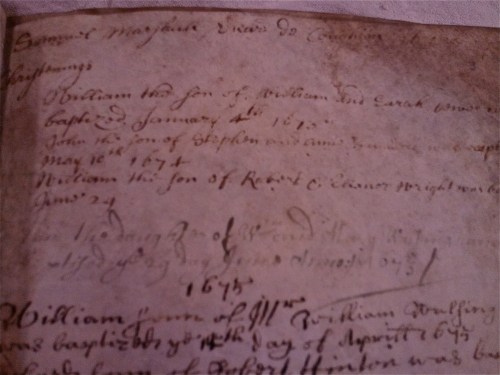

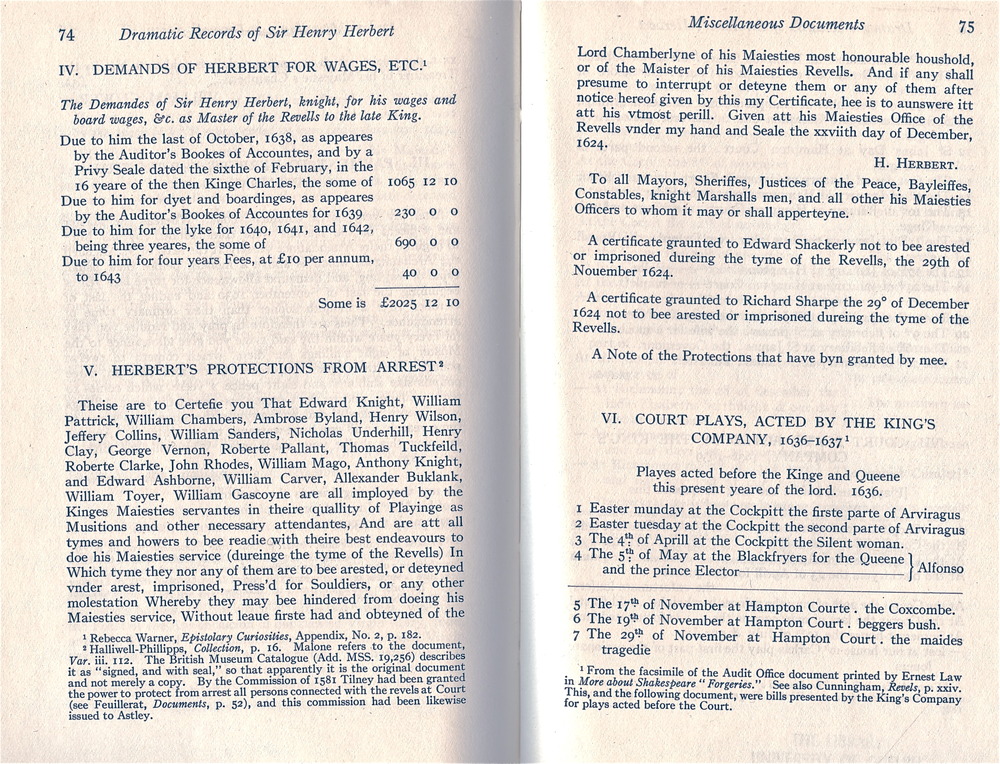
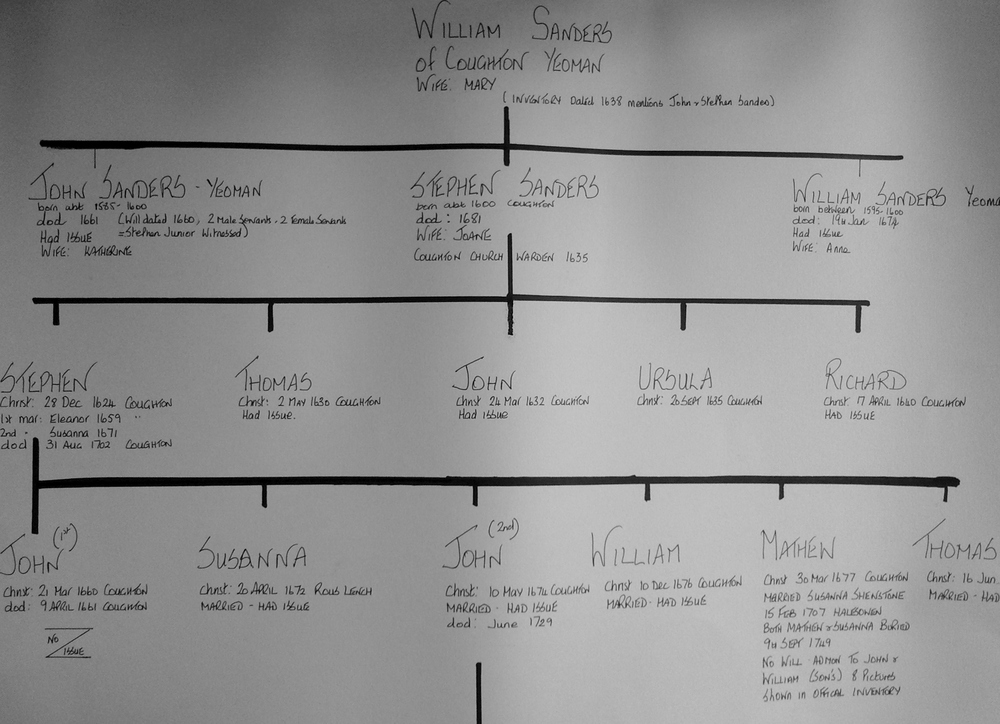
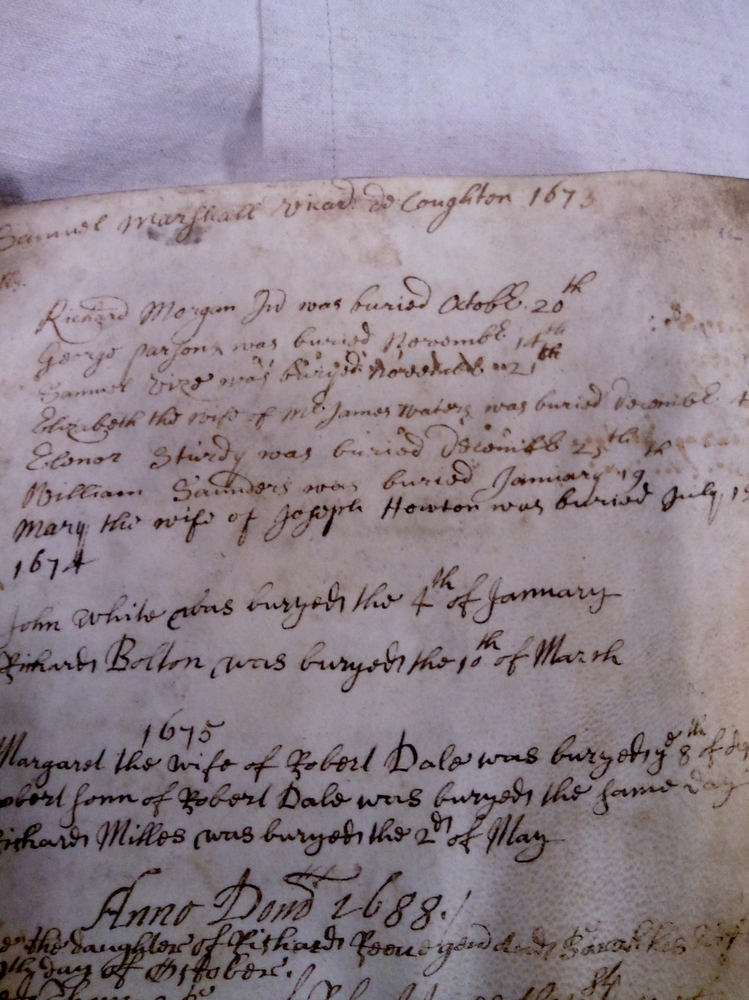
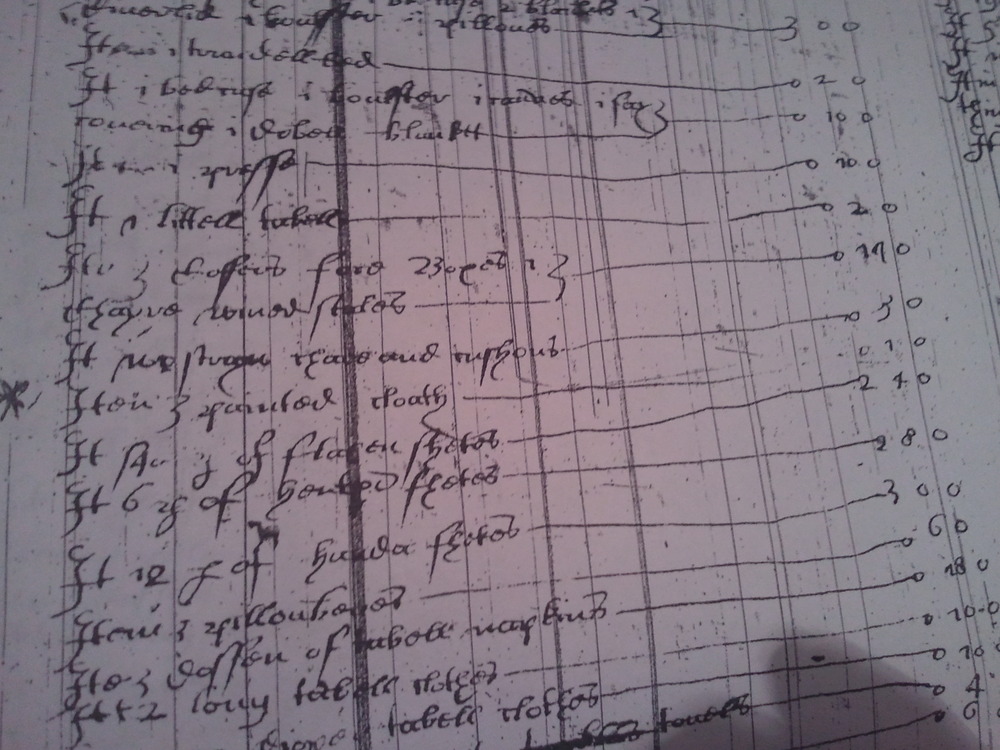
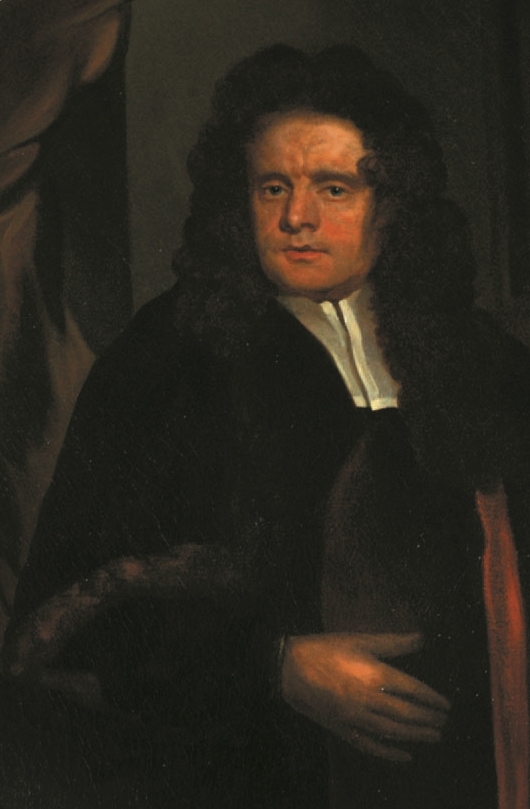

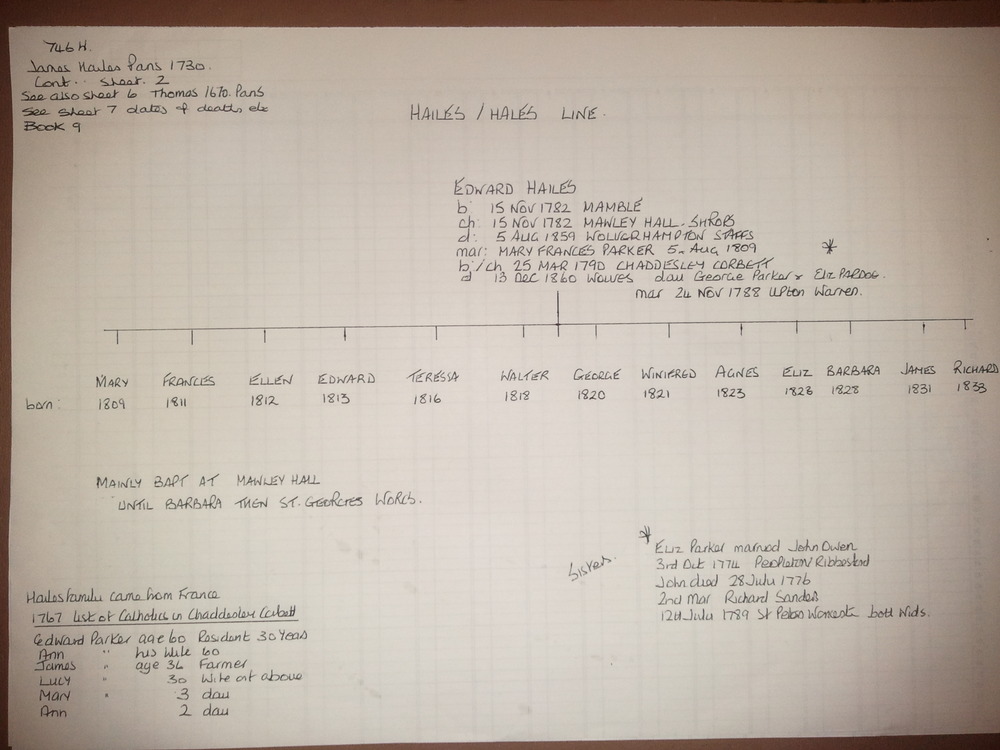
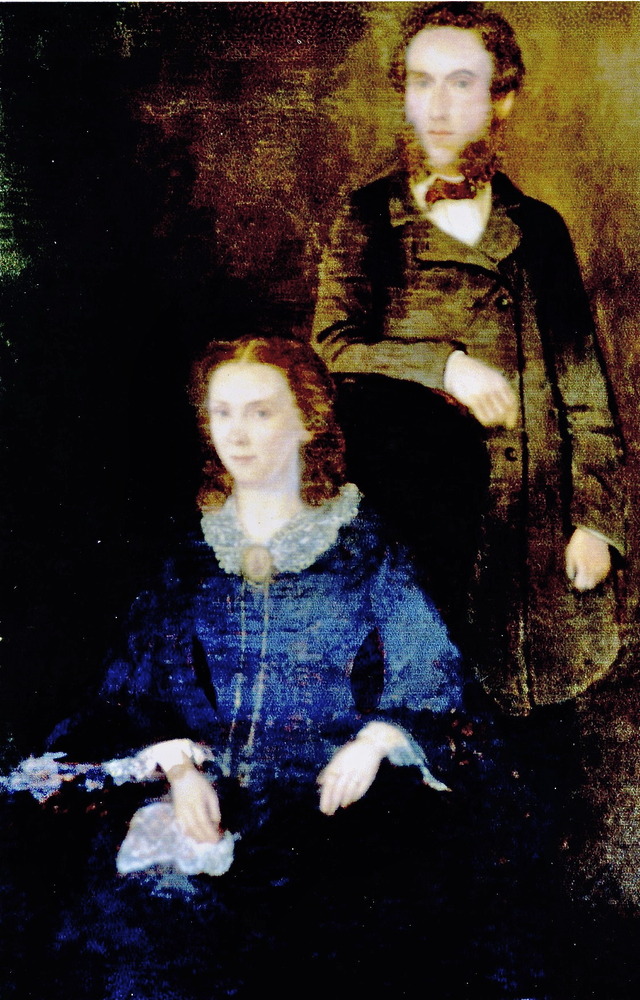
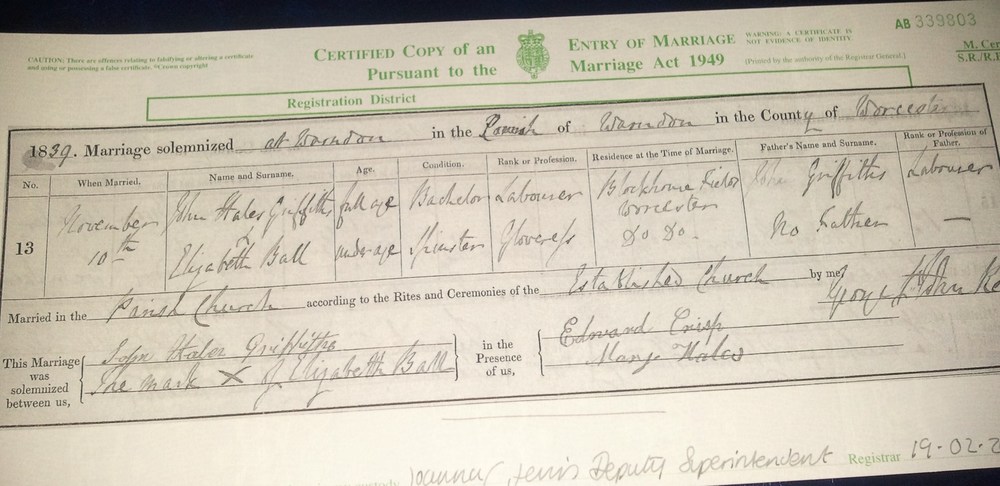
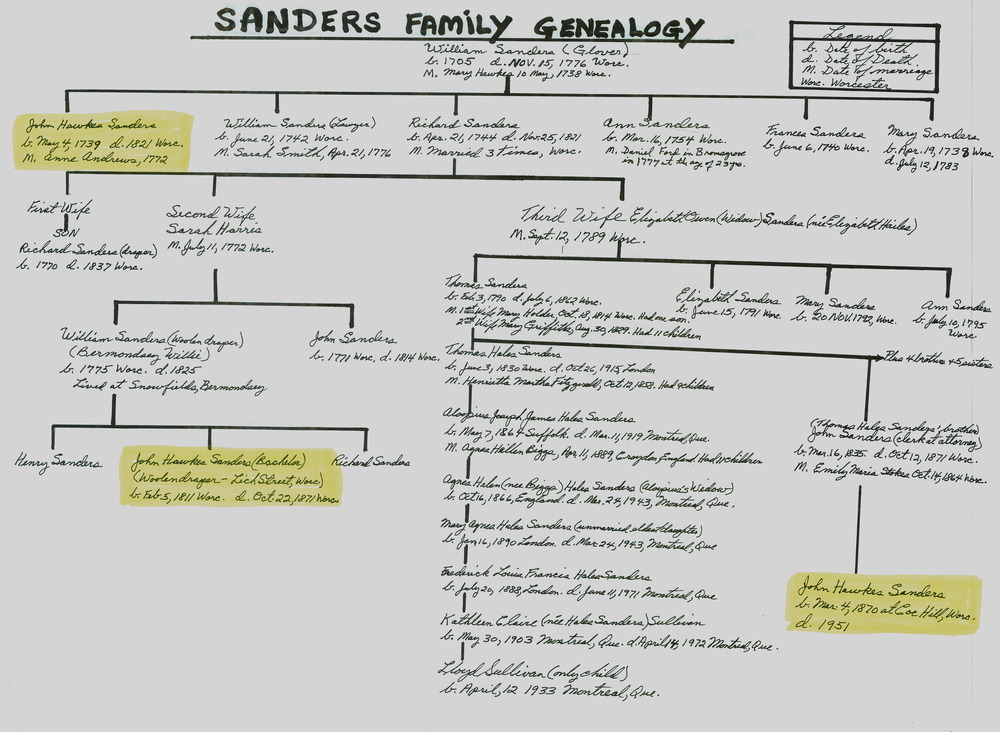
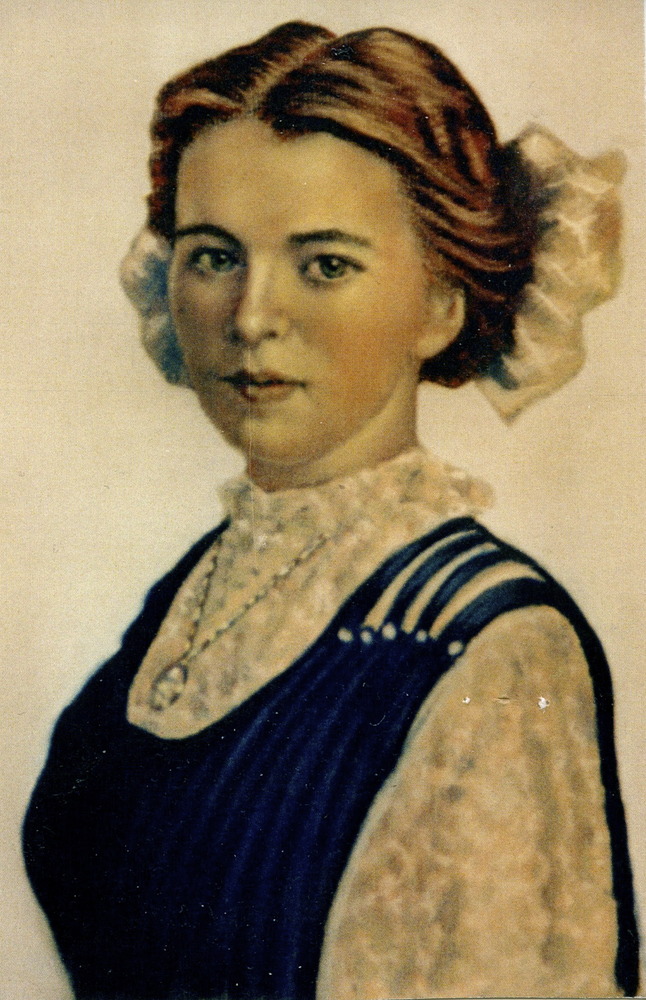
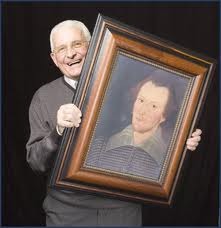
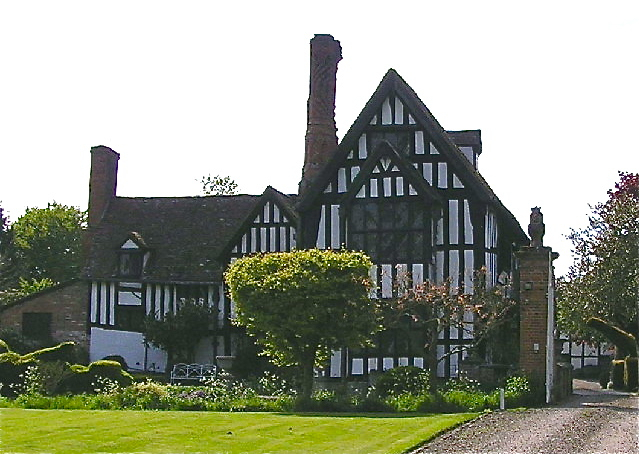


 Canadian Shakespeare News
You must be logged in to post a comment.